
Ghana to receive final $318 Million IMF tranche after July 27 Board Approval
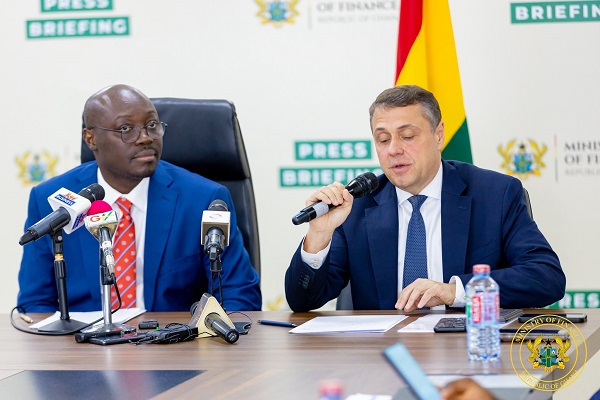
International Monetary Fund (IMF) Mission Chief for Ghana, Dr Ruben Atoyan, has disclosed that Ghana will gain immediate access to its final loan disbursement of $318 million once the IMF Executive Board approves the country’s sixth and final review under the Extended Credit Facility (ECF) programme on July 27, 2026.
Speaking on PM Express Business Edition with host George Wiafe, Dr Atoyan stressed that the funds would be released without delay following the Board’s approval.
“As soon as the Board approves Ghana’s final programme review, the next day I will sign the payslip for the funds to be released,” he stated.
Dr Atoyan explained that although IMF staff and Ghanaian authorities recently reached a staff-level agreement in Accra, the programme has not yet officially ended. According to him, IMF officials are currently preparing a detailed economic assessment report for presentation to the Executive Board ahead of the final review.
Once approved, the final tranche of more than $318 million will be transferred to the Bank of Ghana.
Ghana entered the IMF-backed stabilisation programme in May 2023 and had received about $2.8 billion under the arrangement by December 2025. Approval of the sixth review will increase total disbursements under the ECF programme to approximately $3.2 billion.
Dr Atoyan further noted that unlike previous IMF programmes, where funds were largely used to strengthen Ghana’s foreign exchange reserves, a significant portion of the current ECF support has been channelled into financing capital projects captured in the 2025/2026 national budget.
The IMF Mission Chief indicated that the programme has contributed significantly to Ghana’s macroeconomic recovery through strong domestic reforms and progress in debt restructuring efforts.
According to the Fund, the programme has supported a notable decline in inflation, improved investor confidence in the Ghana cedi, strengthened external financial buffers, and advanced the country’s long-term debt sustainability objectives.
Dr Atoyan added that improvements in Ghana’s debt outlook have created additional fiscal space for government to pursue development priorities while maintaining economic stability.
He, however, cautioned that sustaining the recovery would require continued implementation of prudent public financial management measures and structural reforms aimed at reducing risks associated with contingent liabilities.










Comments (0)