
Under-declared raw rubber exports cost Ghana nearly $70 Million – Report
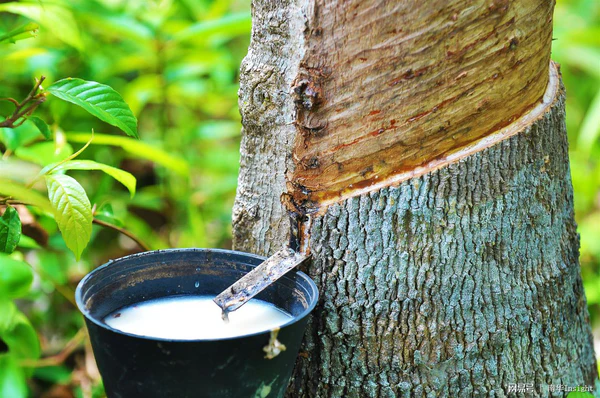
Under-declaration of raw rubber export revenues has reportedly cost Ghana $70 million between 2024 and 2025, while export volumes exceeded official permits, according to an internal investigation obtained by the Ghana News Agency (GNA) in Accra.
The report revealed that raw rubber export data from the Ghana Revenue Authority (GRA) showed 89.68 million tonnes of raw rubber were exported in 2024 alone. However, the Tree Crops Development Authority (TCDA) did not issue a single permit for raw rubber exports that year.
In 2025, TCDA issued permits for 13,000 tonnes of raw rubber, yet official export data—excluding October and November—showed 39,000 tonnes were exported, exceeding permits by 26,000 tonnes.
The investigation highlighted widespread under-invoicing in the raw rubber trade, which appears to facilitate systematic repatriation of resources outside the Ghanaian economy. TCDA had set the average minimum price of raw rubber at GH¢8.62 per kilogram in 2024 and GH¢9.08 per kilogram in 2025. Exporters, however, declared average Free on Board prices of just GH¢0.99 and GH¢1.91 per kilogram, respectively.
“This means exporters declared only about 12% of the actual value and volume of raw rubber in 2024, and roughly 22% in 2025,” the report noted.
Under Section 15 of the Foreign Exchange Act, 2006 (Act 723), exporters are required to repatriate the full value of export proceeds through licensed banks. Yet, in 2024, only $6.17 million of the $55.83 million export value was returned to the Ghanaian economy. In 2025, out of $26.03 million worth of raw rubber exported, just $4.48 million was repatriated.
George Eshun, a rubber cultivator in the Nzema East District, confirmed that raw rubber currently sells locally for GH¢8.30 per kilogram. He admitted that he sold to any buyer willing to purchase, noting that the market was not restricted to local processors.
Despite local rubber processing factories having a combined capacity of 171,460 tonnes per year, Ghana produced just around 110,800 tonnes of raw rubber in 2025, leaving a deficit of more than 60,000 tonnes—approximately 35% of the country’s annual output. This shortfall has left processing infrastructure largely idle.
To address this, the government announced restrictions on raw rubber exports to ensure local processors have adequate supplies. Trade Minister Elizabeth Ofosu-Adjare stated that Cabinet had approved the measure to protect domestic industries and maintain raw material availability. Finance Minister Dr Cassiel Ato Forson also highlighted the export restrictions during the 2026 Budget Statement presentation.
In 2025, with 39,000 tonnes of raw rubber exported, domestic processors were left with only about 60,000 tonnes, forcing many firms to operate below 40% capacity. Job losses in the sector have exceeded 35%, and one local processing company, Apex, has not processed any rubber since 2024. Five of the remaining six factories have scaled down operations due to raw material shortages, affecting industry employment, youth opportunities, infrastructure investment, and state revenue.
The Association of Natural Rubber Actors of Ghana (ANRAG) raised concerns in a July 2, 2025 letter, urging stricter enforcement to prevent unregulated exports and safeguard the country’s rubber industry.














Comments (0)