
At least 69 dead in DRC’s Ituri Province as militia violence spirals out of control
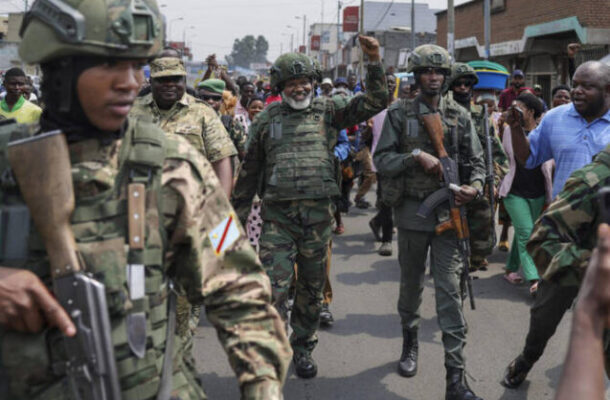
A devastating wave of coordinated militia attacks has left at least 69 people dead in the Ituri province of the Democratic Republic of the Congo, with local officials warning the true toll could be even higher as recovery efforts remain hampered by ongoing insecurity in the volatile northeastern region.
Security authorities confirmed the CODECO militia carried out the late April assault, which they say was triggered by an earlier attack on Congolese army positions near Pimbo by the Convention for the Popular Revolution — a Hema-affiliated armed group.
CODECO, which presents itself as a defender of the predominantly farming Lendu community, responded with a string of retaliatory strikes across several villages, adding fresh blood to a cycle of ethnic violence that has plagued the region for decades.
The human cost of the attacks has been difficult to fully account for, with armed militants preventing recovery teams from reaching the dead for several days. Civil society leader Dieudonne Losa said only 25 bodies had been buried at the time of his account, while noting the total number of fatalities likely exceeded 70.
A humanitarian source described bodies left scattered across the ground near the village of Bassa — a grim scene that has become all too familiar in a province that borders Uganda and South Sudan.
The United Nations Organisation Stabilisation Mission in the DRC said it rescued nearly 200 people caught in the crossfire during the initial assault, and has since issued a strong condemnation of the attacks on civilians.
UN spokesman Farhan Haq separately confirmed that at least 34 civilians were killed across Ituri and North Kivu within a single three-day window, with the broader violence continuing to drive mass displacement across the northern reaches of eastern DRC.
According to the UN Office for the Coordination of Humanitarian Affairs, nearly one million people have already been displaced in Ituri alone.
The bloodshed is unfolding against a backdrop of entrenched conflict rooted in Ituri’s extraordinary mineral wealth.
The region, which yields significant global quantities of cobalt, copper, uranium and diamonds, has for more than three decades been a magnet for armed groups seeking to exploit its resources — funding their operations through the same natural abundance that could otherwise lift communities out of poverty.
Adding to the complexity, 2025 saw the resurgence of the CRP — a group originally founded by Thomas Lubanga, who was convicted by the International Criminal Court in 2012 for conscripting child soldiers and released from custody in 2020.
Fighting involving the CRP, the national army and CODECO has been characterised by widespread abuses against civilians, with the situation made even more tangled by the Congolese military’s occasional use of CODECO as an auxiliary force despite its well-documented record of violence.
The national army meanwhile faces threats on multiple fronts. The Allied Democratic Forces — an Ugandan-rooted group that pledged allegiance to the Islamic State in 2019 — has intensified its campaign of terror, killing at least 40 people and looting communities across Ituri and North Kivu in a cross-border rampage.
Amnesty International’s Rawya Rageh warned that the diversion of Congolese forces to counter the Rwanda-backed M23 rebel group — which has seized key cities in the east — has left entire areas stripped of security, creating openings that armed groups are ruthlessly exploiting.
Amnesty International has gone further still, formally accusing the ADF of war crimes and crimes against humanity in a landmark report.
Secretary-General Agnes Callamard stated that the documented abuses — which include systematic kidnappings, forced labour, child soldier recruitment and widespread sexual violence against women and girls — are crimes the world can no longer afford to look away from.
For the African Union and regional bodies such as the East African Community, Ituri represents one of the continent’s most pressing tests of collective resolve.
The persistence of foreign-affiliated armed groups, the exploitation of ethnic divisions and the plunder of natural resources have created a humanitarian emergency that military deployment alone has proven insufficient to resolve.
As 2026 deepens, the call for a unified continental approach — one that pairs security with resource governance and genuine ethnic reconciliation — grows louder with every life lost.










Comments (0)