
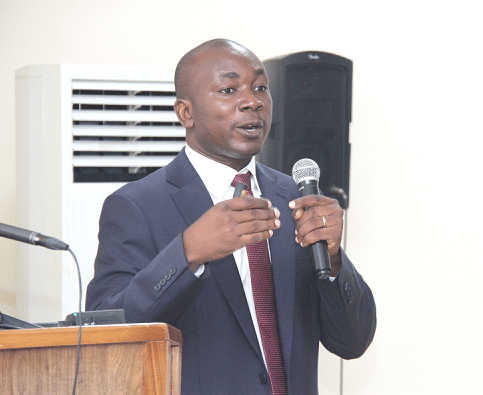
Professor Godfred Alufar Bokpin, Finance expert at the University of Ghana, has cautioned that the 2026 National Budget does not provide a clear framework for sustaining fiscal discipline once Ghana exits its International Monetary Fund (IMF) programme in mid-2026.
Speaking at the annual Deloitte Economic Dialogue, Prof. Bokpin identified the absence of a defined post-programme strategy as a major risk to the budget’s objectives, noting that Ghana has historically reverted to excessive spending and monetary expansion after periods of IMF supervision.
“We are firmly under direct supervision of the IMF that will end somewhere in the middle of next year – and that is where the risk is. I did not see a clear exit plan behind the IMF-supported programme,” he said. He further questioned whether a technical extension, similar to arrangements seen in other countries, could be implemented to mitigate risks.
Prof. Bokpin also criticised the government’s expenditure execution, highlighting that despite fiscal consolidation, resources are often allocated sub-optimally. He cited the 2025 budget, which allocated roughly GH¢33 billion to Capital Expenditure (CAPEX) but achieved only a 55% execution rate. “The state is not spending and allocating resources optimally,” he noted, arguing that delays in vital projects are hampering growth even amid macroeconomic stabilisation.
The professor further raised concerns about rising institutional costs due to structural duplication across the public sector. He cited the GH¢150 million allocated for the 24-Hour Economy initiative as an example, asserting that such programmes could be implemented through existing ministries, departments, and agencies (MDAs) rather than creating costly new structures.
Prof. Bokpin proposed a shift toward a “low-cost, high-achievement democracy,” emphasising that Ghana’s future growth depends on optimising existing state machinery, reducing redundancy, and ensuring that fiscal resources are spent efficiently. He stressed that structural reforms and effective resource utilisation are essential to achieving self-sustained growth independent of external bailouts.
“The key challenge now is not just navigating the macroeconomic crisis, but embedding fiscal discipline and structural efficiency to avoid repeating the historical cycle of indiscipline,” he concluded.
Comments