
The International Monetary Fund (IMF) has clarified that the widely cited US$214 million figure associated with Ghana’s Domestic Gold Purchase Programme (DGPP) does not constitute a loss by the Ghana Gold Board (GoldBod), but rather reflects a policy-related accounting cost.
The Fund explained that the programme was implemented during a particularly challenging period for Ghana’s economy and delivered significant stabilising benefits despite the associated costs.
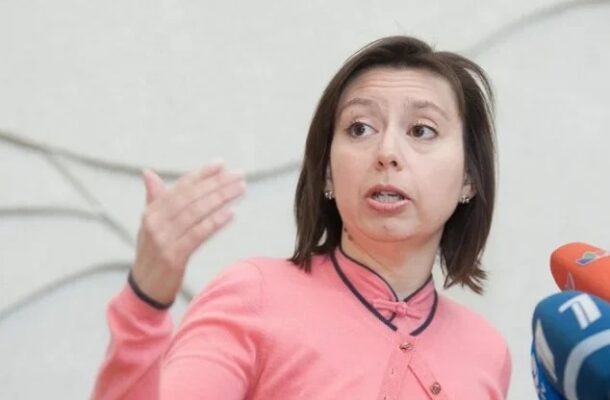
Addressing the issue at a press briefing in Washington, IMF Director of Communications Julie Kozack responded to questions arising from the Staff Report for the Fifth Review of Ghana’s IMF-supported programme. She noted that while the DGPP supported key macroeconomic objectives, it also resulted in what the IMF describes as a “quasi-fiscal loss.”
According to the IMF, a quasi-fiscal loss refers to costs that do not appear directly on the government’s fiscal balance sheet but nonetheless represent an obligation borne by the state.
Ms Kozack highlighted that the DGPP played an important role in boosting Ghana’s international reserves and easing pressure on the foreign exchange market during one of the country’s most difficult economic periods.
“On the benefit side, what we see is a contribution to a buildup of international reserves and reduced pressure on the foreign exchange market during a difficult period for Ghana,” she said.
She explained that the US$214 million figure stemmed from trading margins, fees and exchange rate movements, which are typical of commodity-backed liquidity operations, rather than from operational inefficiencies or mismanagement.
In light of this, the IMF has recommended enhanced transparency, stronger governance and improved risk management around the programme. It has also advised that such quasi-fiscal costs be reflected in the national budget rather than on the Bank of Ghana’s balance sheet, to protect the central bank’s core policy mandate.
The IMF’s position aligns with earlier explanations by GoldBod, which maintained that the figure did not represent a realised loss or failure of the DGPP. The Fund’s assessment confirms that the amount should be viewed as a policy cost rather than a deficit attributable to any single institution.
Meanwhile, the Governor of the Bank of Ghana has informed Parliament’s Public Accounts Committee that discussions are ongoing among key stakeholders, including GoldBod, to reform and strengthen the DGPP in line with the IMF’s recommendations.
These engagements are expected to focus on improved governance arrangements and clearer coordination between government, the central bank and the Ghana Gold Board.
GoldBod has welcomed the IMF’s clarification, reiterating that the DGPP was conceived as a strategic intervention to support macroeconomic stability and maximise value from Ghana’s gold resources, not as a short-term profit-making venture.
Comments