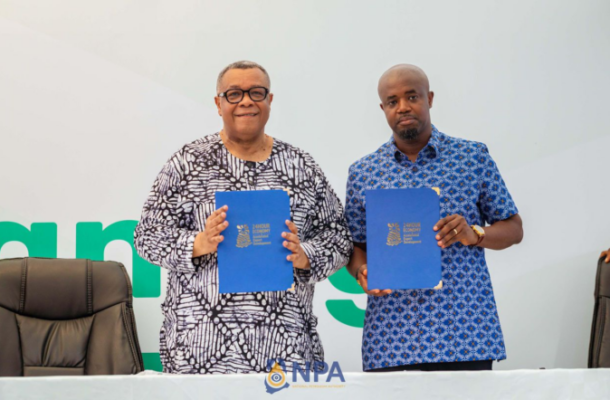
The 24-Hour Economy Authority and the National Petroleum Authority have signed a Memorandum of Understanding (MoU) to support the rollout of 24-hour operations across Ghana’s downstream petroleum sector.
The agreement, signed in Accra on March 31, is part of broader efforts to drive economic transformation by ensuring a reliable, continuous fuel supply nationwide.
Key Focus Areas
Under the MoU, the National Petroleum Authority will be responsible for developing and enforcing operational standards to support 24-hour service delivery.
These standards will apply to fuel stations, refineries, bulk storage depots, and bulk road transport operations.
They will cover essential areas such as:
- Adequate lighting systems
- Enhanced security arrangements
- Staffing and shift protocols
- Digital fuel monitoring systems
- Fire safety measures
Meanwhile, the 24-Hour Economy Authority will focus on creating an enabling environment by coordinating security deployment and facilitating cross-government support for operators certified to run round-the-clock services.
Supporting Economic Transformation
The initiative is closely aligned with Ghana’s 24-hour economy agenda, which aims to expand agro-processing, boost manufacturing, and strengthen logistics networks.
A dependable fuel supply is seen as critical to sustaining productivity across these sectors, ensuring businesses can operate efficiently without interruptions.
Pilot Phase and Implementation
Implementation will begin with a nationwide pilot covering approximately 10 percent of the downstream petroleum sector. Security deployment has been identified as an immediate priority.
The NPA has already established a Steering Committee and technical sub-committees to oversee the transition, working in collaboration with industry players, regulators, and security agencies.
Leadership Remarks
Augustus Goosie Tanoh described the programme as a strategic initiative aimed at building industrial capacity and stimulating economic demand.
On his part, Godwin Kudzo Tameklo noted that the agreement reinforces regulatory oversight while supporting national development goals, assuring that clear and enforceable standards will be applied to safeguard workers, consumers, and critical infrastructure.
The partnership marks a significant step toward operationalising Ghana’s 24-hour economy vision, with the downstream petroleum sector playing a central enabling role.
Comments