Minority demands immediate reversal of new utility tariff increases
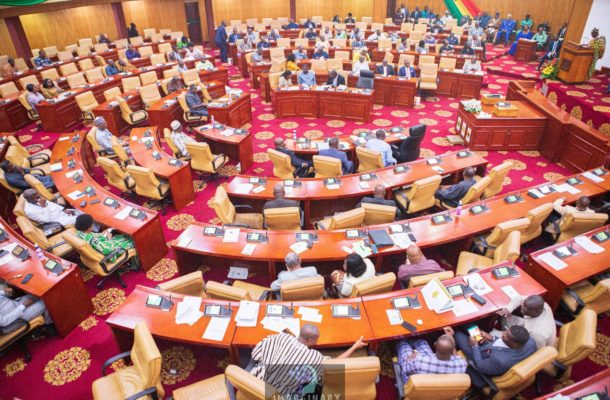
The Minority in Parliament has strongly criticised the government over the latest utility tariff adjustments, demanding the immediate reversal of what they describe as punitive and unjustified increases that will further strain households and businesses.
Their reaction follows the announcement by the Public Utilities Regulatory Commission (PURC) approving a 9.86 percent increase in electricity tariffs and a 15.92 percent rise in water tariffs, effective January 1, 2026, under its 2026–2030 multi-year review.
According to the Commission, the adjustments are necessary to support investment needs, account for inflation and exchange rate pressures, and ensure utility providers remain financially sustainable.
However, the Minority argues that the government should address long-standing inefficiencies in the sector instead of transferring the cost to consumers. They contend that recovering the millions lost annually through technical and commercial power losses would significantly reduce the need for tariff hikes. The caucus insists that Ghanaians cannot bear further increases and that a reversal is the only responsible course of action.
Speaking to journalists in Accra on Monday, December 8, George Kwame Aboagye, Ranking Member on the Energy Committee and MP for Asene Manso Akroso, described the cumulative 28.14 percent rise in electricity tariffs within a short period as unacceptable—especially at a time when the country continues to record persistent losses amounting to 32 percent.
He said the decision to impose new increases despite these inefficiencies amounted to “a direct assault on the livelihoods of ordinary Ghanaians and the survival of businesses,” adding that the administration had chosen “the lazy path of shifting its failures onto already suffering consumers.”
Aboagye warned that the new tariffs would erode the recently approved 9 percent weight adjustment for 2026 and plunge more households into what he called “utility poverty,” leaving many unable to afford basic electricity needs. He further cautioned that small and medium-scale enterprises, the backbone of the economy, risk collapse under rising operational costs.
“These tariff hikes are not reforms, they are punishments,” he said. “They are not solutions. They are symptoms of failed leadership and poor policy choices. We call on the government to halt these incessant increases. The Minority stands with Ghanaian workers, households, small businesses, and industries struggling to survive. These tariff hikes must be reversed immediately.”
Citing the country’s energy performance indicators, Aboagye questioned why significant losses persist despite stable demand levels. He noted Ghana’s current peak demand of 4,080 megawatts and an average demand of about 3,500 megawatts, highlighting the scale of unaddressed inefficiencies.
“If you deduct 30 percent losses—12 percent technical and 20 percent commercial—you can see the magnitude of money lost. We are losing about 80 to 90 million dollars,” he noted. “Tell me, can’t we use this money to offload whatever cost or debt we have? Every time we talk about losses, but it seems nobody is taking serious account of them. When you say review, review can be downward or upward, so why not downward?”













Comments (0)