
BoG shifts focus to economic resilience over capital inflows — Dr Mumuni
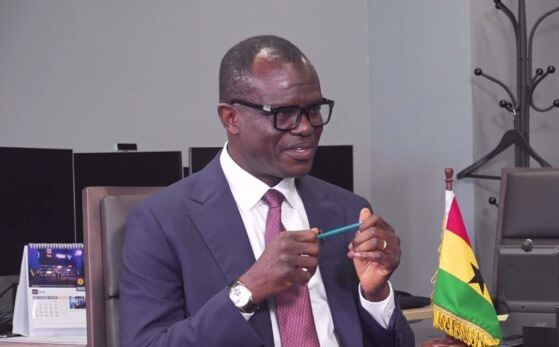
The Bank of Ghana has underscored the need for emerging economies to prioritise economic resilience over reliance on volatile foreign capital inflows, as global financial conditions tighten amid geopolitical tensions and rising inflation risks.
Speaking at the 64th ACI Financial Market Association (ACI FMA) World Congress in Accra, First Deputy Governor Zakari Mumuni said shifts in global liquidity and heightened uncertainty in international markets are exposing structural weaknesses in developing economies.
He noted that the period of abundant and predictable global liquidity that supported emerging markets over the past decade has largely faded, leaving countries with weak fiscal and institutional buffers more vulnerable to financial shocks.
“Global liquidity remains abundant, yet increasingly volatile,” Dr Mumuni said. “Capital flows continue to provide important opportunities for emerging markets, but they also carry significant risks.”
His comments come amid rising global uncertainty triggered by escalating geopolitical tensions, particularly in the Middle East, which have disrupted trade routes, pushed up oil prices and intensified inflationary pressures worldwide.
The International Monetary Fund (IMF) has revised its 2026 global growth forecast downward to 3.1 percent from 3.3 percent, warning that prolonged instability could further weaken the outlook.
Dr Mumuni warned that higher interest rates in advanced economies, especially the United States, are likely to continue diverting capital away from emerging markets into safer assets, increasing exchange-rate pressures and refinancing risks.
He stressed that emerging economies must shift focus from attracting short-term capital inflows to strengthening institutional credibility, building adequate reserves, and improving policy flexibility.
“For emerging and frontier economies, these developments carry important implications,” he said, adding that global liquidity cycles affect exchange rates, debt sustainability, reserve adequacy and financial stability.
He identified fiscal discipline, reserve adequacy, stronger financial regulation, institutional development and attracting long-term productive capital as key priorities for sustainable growth.
“Reserve adequacy must be viewed as a form of self-insurance rather than a luxury,” he said, urging countries to distinguish between stable investment flows and highly volatile portfolio capital.
Dr Mumuni’s remarks align with the Bank of Ghana’s current policy direction as authorities work to maintain macroeconomic stability despite external pressures.
Recent data shows Ghana’s Composite Index of Economic Activity expanded by 12.6 percent year-on-year in March 2026, up from 2.3 percent a year earlier, driven by stronger credit growth, industrial output and trade activity.
Inflation rose slightly to 3.4 percent in April from 3.2 percent in March, marking the first uptick since late 2024, although core inflation continued to ease. Inflation expectations also edged higher due to concerns over global energy prices.
The central bank has maintained a relatively tight monetary stance, with reserve money growth slowing to 3.6 percent in April from 38 percent a year earlier, while broad money growth moderated to 22.2 percent.
At the same time, lower lending rates have supported a rebound in private sector credit, with average bank lending rates falling to 16.3 percent from 27.4 percent a year earlier.
The banking sector has also shown stronger fundamentals, with total assets rising to GH¢493.9 billion in April and the capital adequacy ratio improving to 22.3 percent. Non-performing loans declined to 18 percent, although credit risk remains elevated.
On the external front, Ghana recorded a current account surplus of US$3.10 billion in the first quarter of 2026, supported by strong export earnings from gold and cocoa as well as steady remittance inflows.
Gross international reserves increased to US$14.4 billion as of May 18, representing 5.7 months of import cover. However, the cedi has still depreciated by 8.4 percent year-to-date due to strong foreign exchange demand and external outflows.
Dr Mumuni concluded that countries able to withstand future global shocks will be those that maintain disciplined macroeconomic policies while strengthening institutions over time, stressing that consistency and long-term reform remain essential.















Comments (0)