Ghana targets 3,000MW additional power capacity by 2030 as demand surges
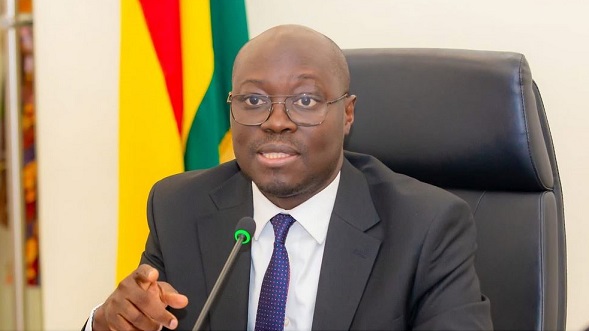
Minister for Finance, Dr Cassiel Ato Forson, has announced that Ghana aims to add 3,000 megawatts (MW) of new electricity generation capacity by 2030, with at least 30 percent expected to come from renewable energy sources.
The target forms part of government’s broader strategy to bridge the widening gap between electricity supply and demand, strengthen energy security, and prevent a return to the prolonged power outages that previously hampered economic growth.
Speaking at the 2026 Ishmael Yamson and Associates Business Roundtable in Accra, Dr Forson stressed that reliable electricity remains essential for the country’s industrialisation agenda.
“Energy security is the non-negotiable precondition for industrialisation. We cannot industrialise in darkness. Our goal is to achieve 3,000 megawatts of additional installed capacity by 2030, with a significant portion coming from renewable energy sources,” he said.
He noted that power shortages continue to impose a heavy economic burden across the continent, with Africa estimated to lose about US$25 billion annually due to electricity outages.
The announcement builds on recent commitments by government to expand power generation, including President John Dramani Mahama’s pledge to commence construction this year on a 1,200MW gas-fired power plant. The project is expected to be the largest single power generation facility proposed in Ghana in recent years.
Ghana currently has an installed electricity generation capacity of about 5,200MW and a dependable capacity of approximately 4,800MW. However, peak electricity demand has risen sharply from around 3,500MW in January 2025 to about 4,300MW, driven by growing economic activity and investment.
Projections indicate that under current growth trends, peak demand could reach 6,150MW by 2030. Analysts warn that without substantial investment in new generation facilities, the country could exhaust its dependable capacity by 2027 and its installed capacity by 2028, increasing the risk of renewed power shortages.
The challenge could become even greater if the government’s proposed 24-hour economy programme is fully implemented. The initiative, which includes plans for industrial parks, agro-ecological zones, and digital hubs, could push peak electricity demand to an estimated 9,150MW by 2030.
The planned 1,200MW gas-fired plant is expected to play a central role in meeting future demand. According to government, the facility will strengthen domestic supply, improve system reliability, and potentially position Ghana to export surplus electricity to neighbouring countries, including Burkina Faso.
The project is expected to consume an additional 150 million standard cubic feet of natural gas per day from the Offshore Cape Three Points partners and the Ghana Power Plant 2 project. Once completed, it will become the largest power generation facility in the country.
Despite plans to expand generation capacity, challenges within the electricity distribution system remain significant. The Electricity Company of Ghana (ECG) recorded distribution losses of 32 percent in 2024, the highest level in more than two decades, resulting in substantial revenue losses.
Although Ghana restored some confidence in its energy sector in 2025 by clearing US$1.47 billion in legacy arrears and fully replenishing a World Bank Partial Risk Guarantee facility, major structural challenges persist.
ECG’s debt currently stands at approximately GH¢68 billion, while the International Monetary Fund (IMF) has projected a US$2.2 billion financing shortfall for the energy sector in 2025. The cumulative financing gap across the sector between 2023 and 2026 is estimated at GH¢140 billion.
According to Energy Sector Recovery Programme data, power sector financing shortfalls between 2019 and 2023 amounted to about US$8.25 billion, highlighting the scale of investment required to restore long-term sustainability.
Meanwhile, developments within the regional electricity market are creating new opportunities and competitive pressures for Ghana. In November 2025, the West African Power Pool (WAPP) successfully completed its first full regional grid synchronisation trial, paving the way for a unified regional electricity market.
Nigeria has also announced plans to export electricity to up to 15 West African countries by mid-2026, with projected annual revenues of about US$1 billion.
In addition, the World Bank approved a US$1.6 billion multiphase West Africa Regional Electricity Market Programme in January 2025, with the first phase focused on strengthening the Ghana–Côte d’Ivoire interconnection to improve cross-border electricity trade.
Analysts estimate that Ghana will require approximately US$10 billion in investment by 2030 to meet its generation, transmission, distribution, and off-grid energy needs.
While the proposed 3,000MW expansion is expected to strengthen energy security, experts caution that relying heavily on gas-fired generation could deepen the country’s dependence on a fuel supply chain that already faces constraints. Thermal power currently accounts for about 70 percent of Ghana’s installed generation capacity and remains heavily dependent on natural gas, oil, and diesel.
The planned renewable energy component, which would account for roughly 30 percent of the new capacity, is expected to diversify the generation mix and reduce vulnerability to fuel supply disruptions. However, analysts say achieving this target will require a clear pipeline of renewable projects, sustainable financing arrangements, and stronger regulatory certainty to attract long-term investment.












Comments (0)