
Government identifies 515,000 Hectares of Rice farmland through satellite mapping initiative
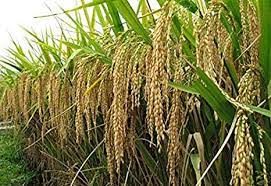
The government has identified approximately 515,000 hectares of land currently under rice cultivation across Ghana through a satellite-based geospatial mapping exercise aimed at boosting investment in the rice sector and advancing the country’s self-sufficiency agenda.
Speaking at the West Africa Rice Investment Roundtable in Accra on June 2, 2026, Minister for Food and Agriculture, Eric Opoku, said the initiative is intended to provide investors with accurate and reliable data while reducing uncertainties associated with agricultural investments.
According to the minister, government has deployed advanced satellite technology to identify, map and assess rice-suitable lands nationwide. The exercise is also helping to organise rice-growing areas into production clusters and evaluate water resources and irrigation potential.
“We have commissioned advanced satellite-based geospatial mapping to identify, delineate and characterize rice-suitable land nationwide,” Mr. Opoku stated.
He explained that the programme seeks to determine the total land area required for Ghana to attain rice self-sufficiency while generating detailed information on field boundaries, cultivation patterns and production capacity.
Preliminary findings from the mapping exercise indicate that about 515,000 hectares of land are already being used for rice cultivation under rain-fed lowland, irrigated lowland and inland valley production systems across the country.
Mr. Opoku said the data generated by the initiative presents significant opportunities for investors seeking to enter Ghana’s rice value chain.
“What this means for the partners and investors in this room is straightforward. We are no longer offering you vague potential. We are offering verified, location-specific investment opportunities,” he said.
The minister noted that access to precise information on land location, ecological conditions and productivity gaps would enable investors and financial institutions to make informed decisions while reducing the risks associated with agricultural financing.
“Land we can point to on the map, with its ecology characterized and its productivity gap quantified,” he added.
Beyond investment planning, the satellite infrastructure will also enable authorities to monitor crop development and estimate yields throughout the growing season, enhancing transparency and accountability within the sector.
Mr. Opoku said the ability to track production performance using reliable data would strengthen investor confidence and provide lenders with a credible basis for financing rice production and processing ventures.
“Because the same satellite backbone allows us to monitor crop development and estimate yields season by season, it gives investors and financiers something they rarely have in smallholder agriculture — transparency and a credible basis for tracking performance,” he explained.
The minister described the initiative as a major step toward attracting private-sector investment into Ghana’s rice expansion programme, stressing that investment-led growth remains central to government efforts to reduce rice imports, increase local production and enhance food security.















Comments (0)