
Deputy Education Minister calls for 1–2% of GDP investment in Africa’s digital infrastructure
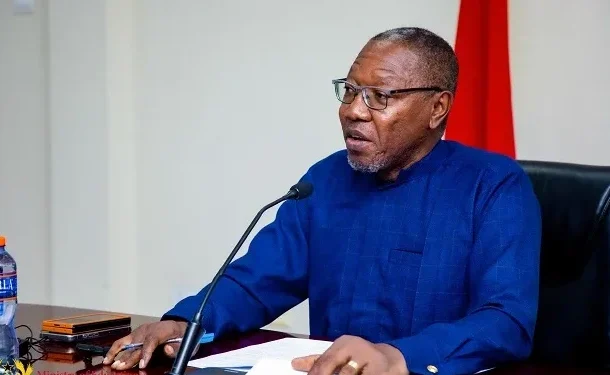
The Deputy Minister for Education, Clement Abas Apaak, has called on African governments to allocate between one and two percent of their annual Gross Domestic Product (GDP) towards the development of digital infrastructure to accelerate the continent’s digital transformation agenda.
Speaking at a ministerial roundtable discussion during the eLearning Africa Conference at the Labadi Beach Hotel in Accra on Wednesday, June 4, 2026, Mr. Apaak stressed that substantial investment in digital infrastructure is essential if Africa is to fully harness the benefits of emerging technologies, including artificial intelligence (AI).
According to him, African countries should consider creating a continental fund dedicated to building critical digital infrastructure capable of supporting innovation, technological advancement and digital inclusion across the continent.
“In my own thinking, part of what we should be looking at is to get African governments to commit at least about 1-2% of their annual GDP towards a pool or a fund that would support the building of continental-level digital infrastructure,” he said.
Mr. Apaak noted that strengthening digital infrastructure would provide the foundation needed to drive AI development, support digital technology adoption and foster innovation in key sectors of African economies.
He further emphasized the importance of African countries mobilising their own resources to finance digital transformation efforts rather than relying heavily on external support.
“For me, that is the biggest challenge that we ought to be addressing—how we can mobilise our own resources to build our own infrastructure and train our own experts as part of the effort to domesticate AI in a way that protects our history, culture and value systems,” he stated.
The Deputy Minister also highlighted Africa’s limited representation among the world’s leading technology companies, describing it as evidence of the need for greater investment in the sector.
“Out of the ten global giants in technology, not even one is African. Nine are American, and if our emails still have to bounce off Europe and America before reaching us, then what is really our basis for trying to assert some semblance of independence?” he questioned.
He argued that the continent’s continued dependence on foreign technology infrastructure presents a major challenge to achieving digital sovereignty and competitiveness in the global digital economy.
Mr. Apaak therefore urged African governments to collaborate in mobilising resources, expanding digital infrastructure and developing the skilled workforce needed to position the continent as a significant player in the rapidly evolving technology landscape.
He added that while discussions on digital transformation continue to generate innovative ideas and policy proposals, their successful implementation will depend largely on the availability of adequate funding.
“Thinking through all that we have said—fantastic ideas and very worthy of implementation—but without the resources, how far can we go?” he asked.
The eLearning Africa Conference brought together policymakers, educators, technology experts and development partners to discuss strategies for advancing digital education, innovation and technological growth across the continent.














Comments (0)