
Why Africa must rise against “ungrateful” South Africa
By Paul Nyojah Dalafu
Africa has carried South Africa on its back for decades, and it is time for the continent to stop pretending the sacrifice has been reciprocated. The liberation of South Africa was not won in isolation. It was bankrolled, sheltered, and defended by the rest of Africa. Countries of Ghana to Tanzania, from Nigeria to Zimbabwe, opened their doors to ANC and PAC exiles, trained fighters, funneled resources, and risked their own stability to dismantle apartheid. The debt from that struggle has never been paid.
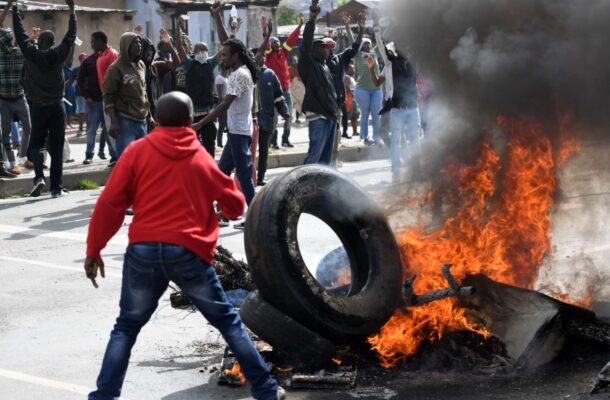
Today, the relationship is inverted. South Africa sits atop the continent’s industrial base, its financial systems, and its cultural exports. Yet its posture toward the rest of Africa ranges from indifference to open hostility. Xenophobic violence erupts repeatedly in South African townships, targeting traders, students, and workers from Ghana, Nigeria, Zimbabwe, Malawi, Mozambique, and the Democratic Republic of Congo. These are not random crimes. They are attacks on Africans whose only offence is seeking opportunity in a country their forebears helped free.
Economically, South African corporations expand aggressively across the continent, extracting profits while repatriating capital and resisting real technology transfer. Diplomatically, Pretoria often acts as if its mandate is to manage Africa on behalf of Western institutions rather than to lead Africa from within. The ungratefulness is not in policy nuance. It is in the refusal to acknowledge that South Africa’s freedom is part of a larger African story, not the other way around.
Africa must rise against this imbalance. Rising does not mean war. It means demanding reciprocity. It means African governments conditioning market access on respect for African migrants. It means redirecting trade, investment, and political alignment toward countries that demonstrate solidarity, not entitlement. It means cultural and intellectual leaders across the continent calling out the myth of South African exceptionalism and reminding the world that the liberation struggle was African, not South African.
The era of one-way loyalty is over. If South Africa wants to lead Africa, it must first act like it belongs to Africa. Until then, the continent must rise, assert its interests, and stop subsidizing ungratefulness with silence.
The economic relationship lays the imbalance bare. South African banks, telecoms, and retailers operate in nearly every African capital, extracting revenue from Lagos to Nairobi, from Accra to Kinshasa. Yet when African entrepreneurs seek the same footing in Johannesburg or Cape Town, they face regulatory barriers, police harassment, and vigilante violence. The message is clear: Africa’s market is open to South Africa, but South Africa’s market is closed to Africa. That is not partnership. It is extraction disguised as integration.
Culturally, the disconnect is worse. South Africa’s film, music, and media industries enjoy continental reach, shaping how the world sees Africa. But too often that image erases the rest of the continent, reducing Africa to a backdrop for South African narratives. When crisis strikes elsewhere in Africa, South African public discourse treats it as distant news. When crisis strikes within its borders, it demands continental sympathy it refuses to extend. Ungratefulness shows up in what is celebrated and what is ignored.
Rising against this requires concrete action. African parliaments must audit South African corporate behavior and tie market access to measurable reciprocity. The African Union must stop treating xenophobic attacks as internal matters and start enforcing the African Charter on Human and Peoples’ Rights. Citizens must redirect spending, talent, and attention toward African economies that honor mutual respect. And historians must teach the next generation the truth: South Africa did not liberate itself alone, and Africa is not obligated to keep paying for a debt that Pretoria refuses to acknowledge.
The continent has waited long enough. If South Africa will not stand with Africa, Africa must stand without South Africa.
The political cost of silence is already visible. Across West, East, and Central Africa, young people watch South Africa’s treatment of their brothers and sisters and ask why their governments still defer to Pretoria in continental forums. Why should Ghana or Kenya lend diplomatic weight to a country that will not protect African lives on its soil? Why should Nigeria or Senegal open trade lanes that flow only one way? Deference without reciprocity is not unity. It is submission.
Rising means rewriting the rules of engagement. It means African states coordinating visa policies that favor countries with clean records on migrant treatment. It means prioritizing intra-African investment from nations that reinvest profits locally. It means using the continent’s collective bargaining power in global institutions to elevate voices that speak for all of Africa, not just for one.
This is not an attack on South African people. It is a demand for accountability from a state that has confused geography with entitlement. Africa gave South Africa freedom, markets, and moral authority. In return, Africa expects respect, protection, and partnership. Anything less proves that ungratefulness cannot be tolerated any longer. The rise has already begun. The only question is whether South Africa will join it, or be left behind by it.
The writer is a Journalist, Communications specialist and Public Relations practitioner.
Email: [email protected]






Popular News
No trending posts found.