

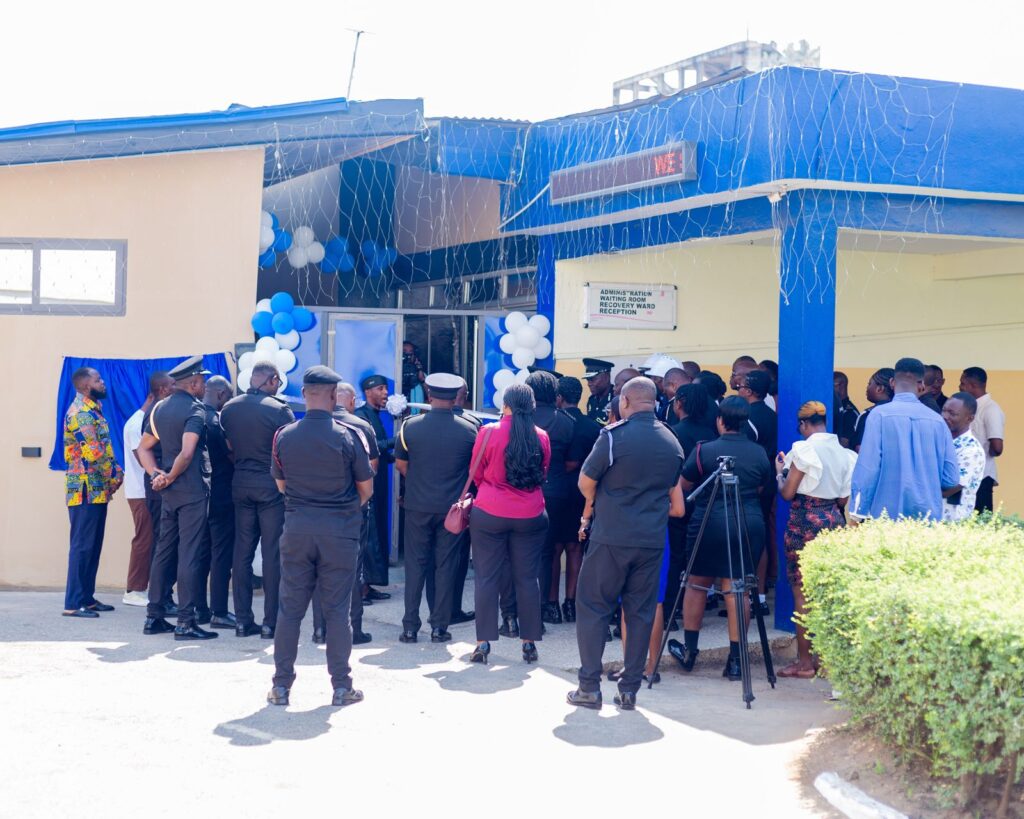
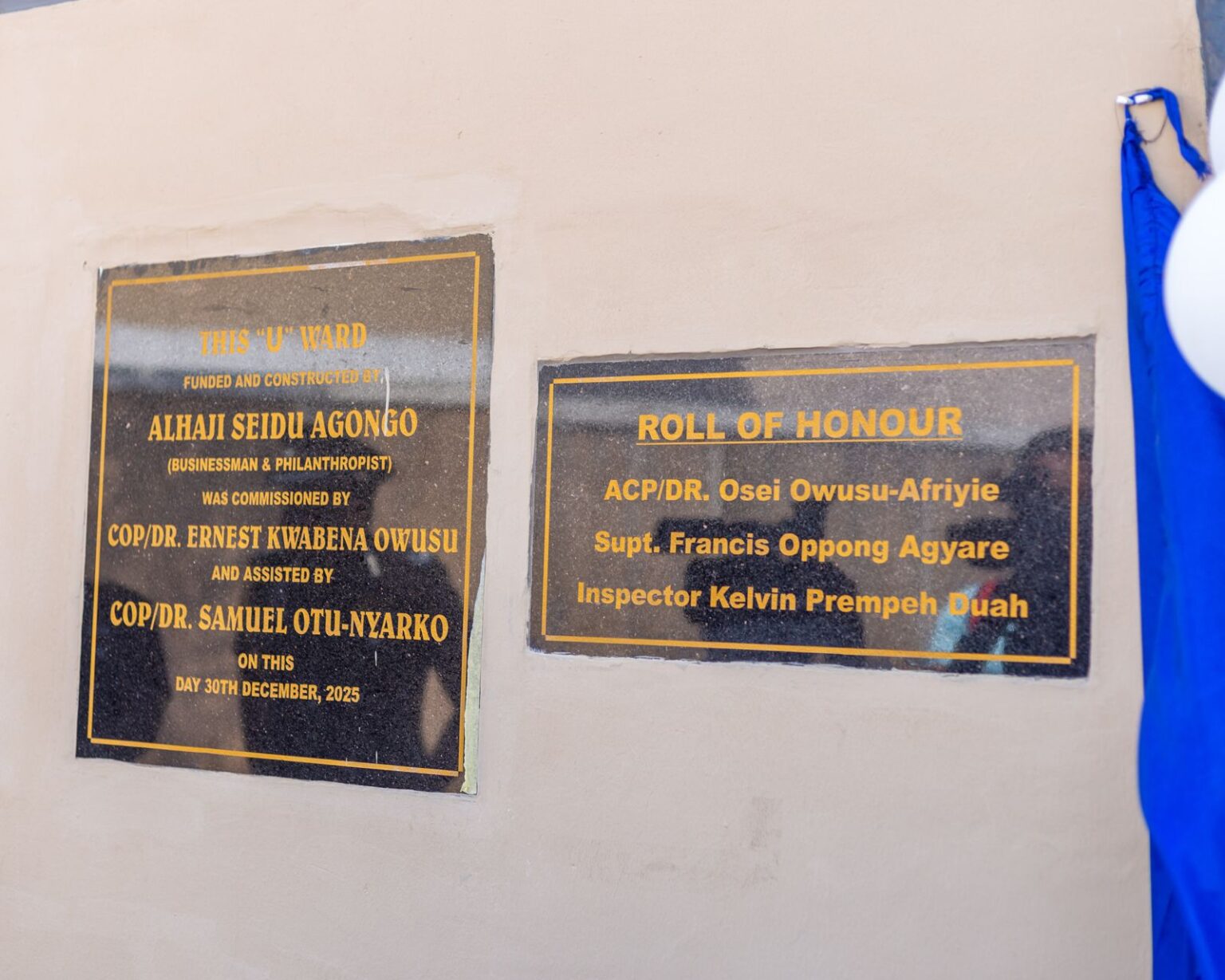
In a rare act of compassion that bridges private philanthropy and public need, businessman and philanthropist Alhaji Seidu Agongo has unveiled a purpose-built eight-bed ward at the Ghana Police Hospital dedicated to the care of “unknown” patients—individuals brought in without identities, relatives or support systems.
The facility was officially inaugurated on Tuesday, December 30, 2025, marking a significant turning point for a hospital that has quietly carried one of the heaviest humanitarian burdens in Ghana’s healthcare system.
For nearly five decades, the Police Hospital has operated under a unique mandate. Established in 1976, it serves not only police personnel and their families, but also suspects, convicts and the general public.
Over the years, the treatment of unidentified patients—often accident victims, destitute persons or individuals battling mental illness—has become one of its most demanding responsibilities.
Hospital authorities say these patients frequently arrive in critical condition, nameless and abandoned, with the institution bearing the full cost of their treatment, rehabilitation and in some cases, burial.
The financial toll is staggering. Annually, the hospital spends more than one million cedis on the care of unknown patients, while mass burials of between 1,000 and 1,200 unidentified bodies cost an additional GH¢400,000 every year.
With an average of 30 unknown patients admitted each month and about 10 long-term cases at any given time, congestion, infection control and funding pressures have steadily intensified.
It was against this backdrop that the Ghana Police Service appealed for public support. Alhaji Agongo, founder of the erstwhile Heritage Bank, responded with what hospital officials have described as an unprecedented intervention.
Beyond constructing the eight-bed facility, he has committed to providing quarterly financial support to assist with the hospital’s mass burial programme and to help settle medical bills for unidentified patients—making him the first private individual to formally share this long-standing burden with the Police Hospital.
The new ward is designed to separate severely neglected patients from the general hospital population, improving infection control while restoring dignity to people society has largely forgotten.
“When I learned about the plight of these unknown patients—people who come in broken, nameless and abandoned—I knew we had to act,” Alhaji Agongo said at the inauguration.
“Humanity is not measured by what we do for those who can repay us, but for those who cannot. Nobody is truly unknown; we are all known by one Creator, and that should unite us to uplift one another.”
He described the facility as more than a physical structure, calling it a sanctuary for lives that still matter even when no one comes to claim them.
He expressed hope that the initiative would inspire others to look beyond personal interests and support causes that restore dignity to the most vulnerable.
Hospital management says the impact will be immediate—easing congestion, improving standards of care and significantly reducing financial strain.
They also believe the project could catalyse further private support for the institution’s humanitarian work.
For decades, the Police Hospital has treated unknown patients and buried unidentified bodies with little to no external assistance. Alhaji Agongo’s intervention marks a historic shift.
As the new ward opens its doors, December 30, 2025, will be remembered as the day compassion took concrete form—ushering in a new chapter of hope for the nameless souls who pass through the hospital’s care.
Alhaji Agongo insists his philanthropic efforts are not driven by recognition or expectation of reward. Rather, they stem from a belief that societies advance when people support one another selflessly.
“We don’t help because we are related; we help because there is a need to make each other better,” he said.
That philosophy has shaped several interventions over the years, including the establishment of Fanaka University to promote entrepreneurship and practical education, scholarships for underprivileged students, medical support for needy patients, and the construction of a ward for the Child Emergency Unit at the Korle Bu Teaching Hospital.
He has also donated medical supplies during the COVID-19 pandemic and provided relief to flood victims—efforts he describes simply as responding to urgent needs and restoring dignity.
At the Ghana Police Hospital, that belief has now been etched into brick and mortar—proof that private compassion, when matched with decisive action, can change lives even when those lives have no names.
Comments