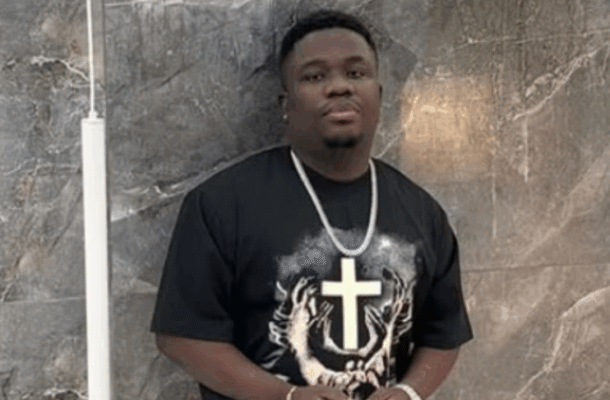
Popular socialite Abu Trica has reportedly dragged Ghana’s Ministry of the Interior and a number of local and international law enforcement bodies to court, alleging unlawful arrest, extended detention and violations of his fundamental human rights in connection with an ongoing international fraud probe.
According to information shared by Accra-based broadcaster TV3 Ghana on Instagram on Monday, the socialite has filed a lawsuit naming the Ministry of the Interior, the Narcotics Control Commission (NACOC), the Economic and Organised Crime Office (EOCO) and the United States Federal Bureau of Investigation (FBI) as defendants.
The suit is said to challenge both the legality of his arrest and the conditions under which he has been held, arguing that due process has not been adequately observed.
Abu Trica, whose real name is Frederick Kumi and who also goes by Emmanuel Kojo Baah Obeng, was remanded into custody after being rearrested by NACOC officers shortly after a court appearance on Wednesday, January 28, 2026.
He has remained in detention since December 11, 2025, when he was first arrested during a joint operation involving Ghanaian security agencies and the FBI.
Meanwhile, documents unsealed by the United States Department of Justice paint a grim picture of the allegations against him.
Abu Trica is accused of involvement in a sophisticated financial crime syndicate and faces charges including conspiracy to commit wire fraud, conspiracy to launder money and forfeiture-related offences. A conviction in the United States could attract a prison sentence of up to 20 years.
In an earlier statement announcing his arrest, US authorities alleged that Abu Trica was part of an organised network behind large-scale romance scams that targeted elderly victims across the United States.
The syndicate is believed to have been operating since 2023 and is accused of defrauding victims of more than eight million dollars.
Investigators claim the group relied heavily on artificial intelligence to create fake online personas and build emotional relationships with unsuspecting victims, primarily through social media and dating platforms.
Once trust was established, victims were allegedly manipulated into sending money and valuables under false pretences such as medical emergencies, travel needs or fictitious investment opportunities.
Abu Trica is said to have played a key role in facilitating the transfer and distribution of the alleged proceeds from the United States to Ghana and other countries.
The investigation is reportedly being led by the FBI’s Cleveland Division, working in collaboration with Ghana’s Attorney-General’s Department, EOCO, the Ghana Police Service, the Cyber Security Authority, NACOC and the National Intelligence Bureau.
As legal battles unfold both locally and internationally, the case continues to attract significant public attention, raising broader questions about cross-border crime, due process and the rights of suspects in high-profile investigations.
Comments