
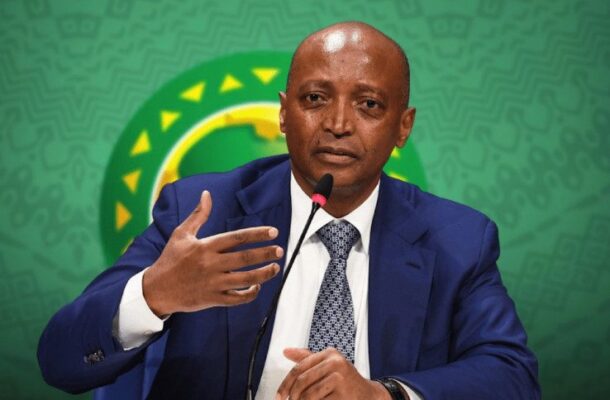
CAF President Patrice Motsepe has confirmed that the Africa Cup of Nations (AFCON) will move from its traditional two-year cycle to a four-year cycle starting in 2028.
The announcement was made on the eve of the 2025 AFCON in Morocco, marking the biggest structural change to the competition since its inception in 1957.
“We have the most exciting new structure for African football,” Motsepe declared.
Transition Timeline
- 2025 AFCON: Morocco (Dec 21, 2025 – Jan 18, 2026).
- 2027 AFCON: Kenya, Uganda, Tanzania (final edition under two-year cycle).
- 2028 AFCON: First tournament under new four-year schedule.
- 2029: Launch of the African Nations League, to be staged annually.
Why the Change?
- European club pressure: Concerns over AFCON’s timing and player availability.
- Scheduling challenges: Recent editions repeatedly rescheduled (Cameroon 2021 → 2022, Ivory Coast 2023 → 2024).
- Climate factors: June–July tournaments in West Africa disrupted by heavy rainfall; Egypt 2019 affected by extreme heat.
- Global calendar conflicts: Morocco 2025 shifted to December–January due to FIFA’s expanded Club World Cup.
Historical Context
- AFCON has been staged biennially since 1968, with only one exception (2012–2013).
- Widely regarded as Africa’s flagship sporting event, the tournament has grown into a showcase of continental talent and pride.
Significance
The move to a four-year cycle aligns AFCON with the FIFA World Cup and UEFA European Championship, potentially boosting commercial value and reducing club-versus-country tensions. However, the decision is likely to divide opinion among fans, federations, and players who cherish the biennial rhythm of Africa’s premier competition.
Comments