
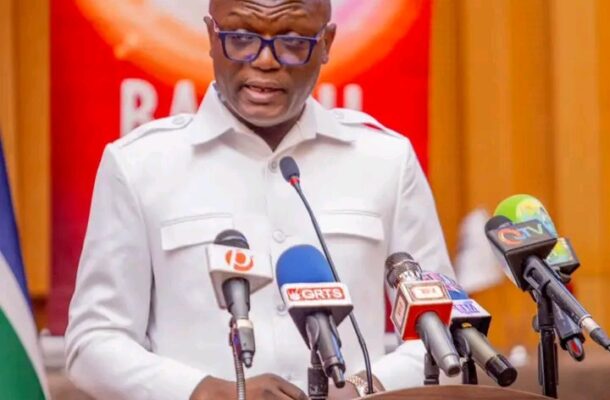
Ghana’s Minister for Sports and Recreation, Kofi Adams, has called on African governments and stakeholders to take bold, strategic action to turn sport into a major economic force across the continent.
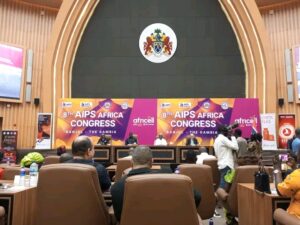
Speaking at the opening ceremony of the AIPS Africa Conference in Banjul, The Gambia, Mr Adams said Africa could no longer afford to treat sport purely as recreation, insisting it must be recognised as a serious industry capable of creating jobs, wealth and global influence.
He praised The Gambia for its hospitality and political support for sport, youth development and the media, pointing to recent policy and legislative efforts as signs of a growing continental commitment to sports governance.

“Across Africa, we recognise sport’s ability to unite communities, inspire youth and strengthen national identity,” Mr Adams told delegates. “Yet, despite this shared understanding, sport remains undervalued as a strategic economic sector.”
The minister contrasted Africa’s position with the global sports market, which he said was worth more than 512 billion dollars in 2023 and is projected to rise to 624 billion dollars by 2027. Those gains, he explained, are driven by sustained investment in infrastructure, media rights, sponsorship and digital platforms.
By comparison, Africa’s sports economy is estimated at between 12 and 15 billion dollars, less than half a per cent of the continent’s GDP despite Africa accounting for nearly 17 per cent of the world’s population.
“We export our talented athletes cheaply and consume expensive foreign sports content,” he said. “Yet we have the capacity to create and retain significant value here at home.”
Mr Adams identified poor infrastructure, weak commercial structures, governance challenges and limited intra-African mobility for athletes and fans as key obstacles holding the sector back. Without better organisation and regional cooperation, he warned, Africa’s potential would remain largely untapped.
Still, he pointed to positive examples from countries such as Morocco, Rwanda and Tanzania, which he said are using sport strategically to drive economic growth and enhance diplomatic influence.
In Ghana, the minister outlined reforms aimed at repositioning sport as a development tool, including the return of the Ghana Premier League to free-to-air television, increased prize money and the establishment of the Ghana Sports Fund to support infrastructure, grassroots programmes and athlete development.
“These efforts have already helped Ghana host 12 international sporting events in 2025,” he said, adding that the country is strengthening its reputation as a reliable multi-sport destination ahead of future continental competitions.
Mr Adams also urged African sports journalists to uphold credibility and responsible reporting, stressing that the media plays a critical role in building trust and transparency within the sports ecosystem.
“Sport is no longer just about entertainment,” he concluded. “It’s about jobs, content, tourism, identity and power. The opportunity is ours and so is the responsibility.”
The AIPS Africa Conference continues this week, bringing together sports leaders and media professionals to shape a shared vision for unlocking Africa’s vast sports and economic potential.
Comments