
As the New Patriotic Party (NPP) approaches its crucial January 31, 2026 presidential primaries, the debate over continuity versus change has taken centre stage within the party.
At the heart of this argument is former Vice President Dr. Mahamudu Bawumia, whose decision to seek a second chance as flagbearer has drawn both support and criticism.
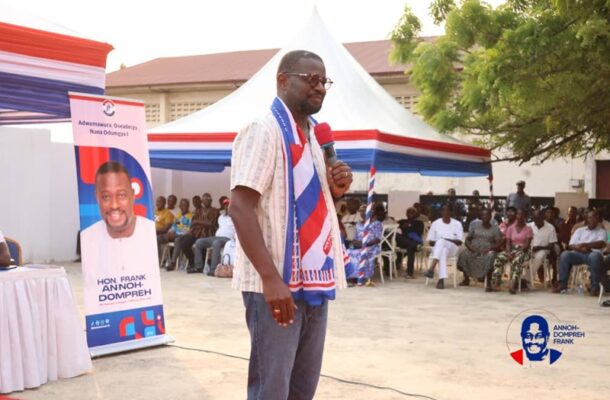
However, Minority Chief Whip and Nsawam-Adoagyiri MP, Frank Annoh-Dompreh, has mounted a strong defence of Dr Mahamudu Bawumia’s candidacy, insisting that none of the other aspirants would act differently if they were in his position.
Speaking during campaign engagements with the Nsawam-Adoagyiri NPP Delegates during a visit by the former second lady Hajia Samira Bawumia, he argued that the criticism directed at Dr. Bawumia for contesting again after leading the NPP in the 2024 elections is largely disingenuous.
According to him, political history and human ambition suggest that any of the current aspirants would gladly accept a second opportunity if they had already been tested on the national stage.
The Post-2024 NPP Rebuild
Following the NPP’s loss in the 2024 general elections to President John Dramani Mahama, the party entered a period of introspection and reorganisation.
With President Nana Addo Dankwa Akufo-Addo constitutionally barred from contesting again, attention shifted to who could best reposition the party for the 2028 general elections.
Dr. Bawumia, who served two terms as Vice President and led the party into the 2024 polls, emerged as the most recognisable face within the NPP.
His decision to seek re-election as flagbearer has been compared by party strategists to the “Mahama model”, where the NDC re-presented John Mahama after defeat and eventually returned to power.
Annoh-Dompreh’s Core Argument
According to Annoh-Dompreh, Dr. Bawumia already possesses unmatched brand equity within the party and the wider electorate.
He maintains that starting afresh with a new candidate would amount to discarding years of political investment, visibility, and voter familiarity.
“None of the other aspirants would reject a second chance if they were Bawumia,” Annoh-Dompreh stressed, arguing that political consistency is a strategic asset, not a weakness.
He noted that Bawumia’s name recognition, national reach, and experience in government place him far ahead in terms of electoral preparedness.
The Minority Chief Whip has also openly cautioned other aspirants, including Dr. Yaw Osei Adutwum and others, suggesting that while they are capable, the 2028 battle requires the party’s most politically marketable figure now, not in the future.
Call for Unity Over Internal Fragmentation
Annoh-Dompreh has consistently warned delegates against what he describes as “wasting votes” by spreading support across multiple candidates.
In his view, a fragmented primary weakens the eventual flagbearer and delays party unity, which is critical if the NPP hopes to mount a strong challenge in 2028.
He insists that the internal contest should not be reduced to regional balance or personal ambition, but rather focused on electability, credibility, and national appeal. On all these counts, he argues, Dr. Bawumia stands out.
Bawumia’s 2024 Record
Supporters of Dr. Bawumia point to his role in the digital transformation agenda, economic reforms, and public sector modernisation as evidence of competence and vision.
Despite the 2024 loss, they argue that his performance expanded the party’s reach in key demographics, including urban voters and Zongo communities.
Frank Annoh-Dompreh believes these gains should be consolidated rather than abandoned.
“Politics is about timing and strategy,” he has noted, adding that the NPP’s best chance of returning to power lies in building on existing political capital rather than resetting entirely.
Comments