
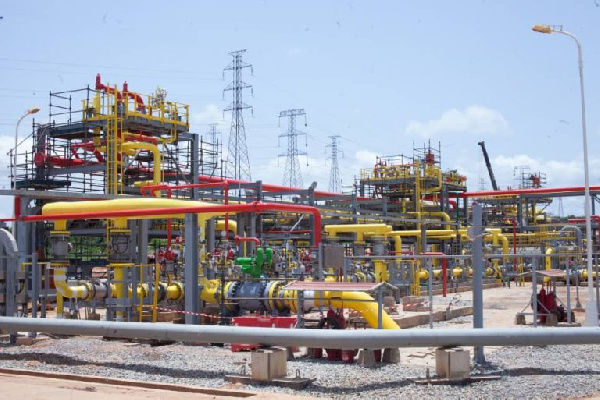
Africa’s downstream energy sector is increasingly emerging as one of the world’s most promising investment frontiers, driven by rapid population growth, urbanisation and expanding industrial activity that are pushing up demand for fuel and clean cooking solutions.
The African Refiners and Distributors Association (ARDA) says the continent’s vast energy potential alone is not enough to attract global capital. Instead, investors are seeking stronger regulatory discipline, improved infrastructure and harmonised fuel standards to make downstream projects more bankable.
In a statement issued by its Executive Secretary, Anibor Kragha, ARDA noted that uncertainty—rather than demand—is the key factor holding back investment.
“Africa has plenty of potential, but capital flows to predictability, discipline and credibility,” the statement said, pointing to fragmented regulations, weak infrastructure and financing risks as long-standing challenges undermining investor confidence in the downstream sector.
ARDA said Africa’s energy demand is expected to rise sharply in the coming decades. By 2050, one in every four people worldwide is projected to live on the continent, significantly increasing demand for refined petroleum products, liquefied petroleum gas (LPG) and supporting infrastructure.
According to the Association, crude oil consumption in Africa could grow from about 1.8 million barrels per day in 2024 to 4.5 million barrels per day by 2050. However, downstream investment has not kept pace with upstream production, leaving many countries dependent on costly imports of refined products despite exporting crude oil.
The Organisation of Petroleum Exporting Countries (OPEC) estimates that Africa will need more than 100 billion dollars in refining investment by 2050, covering upgrades to existing refineries, expansions and the development of new facilities.
Despite the strong outlook, ARDA said many downstream projects struggle to reach financial close due to a persistent “bankability gap”. Global investors, it said, require stable regulatory frameworks, predictable feedstock supply, bankable offtake arrangements, enforceable contracts and well-prepared projects.
The Association highlighted recurring challenges such as inconsistent fuel standards, shallow ports, congested depots, limited storage capacity, exchange-rate volatility and policy uncertainty.
One major constraint, ARDA said, is the lack of harmonised fuel specifications across the continent. Of Africa’s 54 countries, 46 operate national fuel standards, resulting in 12 different gasoline grades and 11 diesel grades, with wide variations in sulphur content.
Upgrading African refineries to cleaner fuel standards would require an estimated 16 billion dollars in investment, ARDA said, but would unlock regional trade, lower costs, improve public health and align Africa with global fuel norms.
Infrastructure bottlenecks also continue to weigh heavily on the sector. A 2024 industry white paper cited by ARDA identified shallow ports, congested berths, inadequate storage, overstretched roads and pipelines, and single points of failure across fuel supply chains.
These inefficiencies, the Association said, add between 20 and 30 dollars per tonne to landed fuel costs and undermine confidence in supply reliability, even as new refining capacity—such as the Dangote refinery—comes on stream.
ARDA also identified clean cooking as one of Africa’s most significant untapped energy markets. More than one billion Africans currently rely on biomass for cooking, a figure that has increased by about 220 million since 2010, posing serious health, environmental and social risks.
The scale of unmet demand, it said, makes Africa one of the most attractive global markets for LPG investment.
To address these challenges, ARDA proposed a blueprint to make Africa’s downstream markets more investment-ready. Key priorities include harmonising low-sulphur fuel standards, rebuilding infrastructure across the value chain, strengthening regulatory and investment discipline, scaling up LPG adoption and developing a pipeline of bankable projects.
The Association said it is working with the African Union Commission, United Nations agencies and regional economic communities to promote cleaner fuels, while advocating deeper ports, expanded storage, rehabilitated pipelines and more resilient logistics systems.
It also said it is supporting efforts to mobilise large-scale financing for clean cooking, including a proposed one-billion-dollar LPG fund to back bankable projects across the continent.
Through thematic workgroups, training programmes and high-level industry forums, ARDA said it is building technical capacity, strengthening governance and supporting the development of a skilled workforce to drive Africa’s energy transition.
According to the Association, Africa’s downstream energy sector represents one of the last large-scale, high-growth energy investment opportunities globally.
“For investors seeking long-term returns anchored in real demand, Africa’s downstream sector is not just an opportunity, it is the next frontier,” the statement said, stressing that sustained capital inflows will depend on discipline, transparency and credible project delivery.
Comments