
Artificial Intelligence Tool Solves Math Problems by Mimicking Handwriting with Precision, Images Go Viral
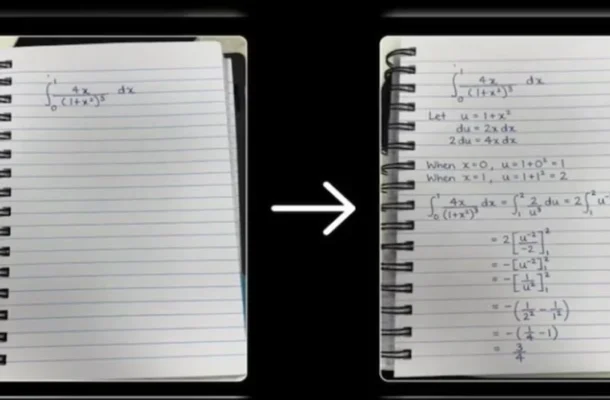
A Google AI model called Nano Banana Pro can solve handwritten math problems while perfectly imitating a user’s handwriting. This report explores how the Artificial intelligence tool solves math problems by mimicking handwriting with precision, images go viral story is reshaping debates around AI, education, and digital ethics.
A Viral Glimpse Into the Future of AI
A new viral post is sparking global conversation after revealing how an Artificial intelligence tool solves math problems by mimicking handwriting with precision, images go viral. The incident centres on Google’s Nano Banana Pro, an advanced model within the Gemini 3 series, which stunned social media users by solving a handwritten math question and reproducing the sender’s handwriting style with remarkable accuracy.
The episode has revived long-standing debates about AI capabilities, academic integrity, and whether technology is advancing faster than society can adapt.
Nano Banana Pro: The AI Behind the Viral Moment
A Tool Designed to Push AI Boundaries
Google’s Nano Banana Pro, part of the company’s Gemini 3 line-up, is built to deliver advanced reasoning, real-time interpretation, and richer contextual understanding. Integrated across platforms such as Google’s AI Studio and Vertex AI, the tool is engineered to generate precise, context-aware outputs that mirror human style.
In this case, a social media user posted a screenshot demonstrating how the Artificial intelligence tool solves math problems by mimicking handwriting with precision, images go viral. According to the user, Nano Banana Pro not only delivered the correct answer but replicated the exact handwriting used in the original question.
“Google’s Nano Banana Pro is definitely the best AI for generating images. I gave it a picture of a question and it solved it correctly with my handwriting,” the post read.
Handwriting Imitation Sparks Global Reaction
Praise and Concern in Equal Measure
The viral post triggered widespread amazement, with users applauding the tool’s ability to seamlessly blend problem-solving with handwriting replication. For many, it demonstrated a major leap in AI’s ability to interpret and produce complex visual information.
Others, however, expressed deep concern.
“Students won’t learn anything and will just let AI do their homework,” one user commented.
Another wrote: “Unbelievable, and we’re still only in the early days of AI.”
A third added: “Not just normal images, but it can maintain consistency in text in a full text image, it’s just amazing how Google achieved this. I didn’t predict this year.”
While some believed the viral screenshot might be fake, the poster insisted it was genuine, claiming that the model understood the handwritten prompt with near-human accuracy.
Why the Story Matters for Education
Rethinking the Classroom in an AI Era
As the Artificial intelligence tool solves math problems by mimicking handwriting with precision, images go viral, educators and policymakers are now confronting uncomfortable questions. Could such tools undermine learning? How will teachers verify whether students completed their own work? And what guardrails must be built to ensure AI supplements rather than replaces education?
While Google has not commented directly on the viral post, the Nano Banana Pro’s capabilities highlight the need for new frameworks that balance innovation with responsibility.
A Glimpse of an AI-Powered Tomorrow
From Viral Post to Global Debate
The incident surrounding how an Artificial intelligence tool solves math problems by mimicking handwriting with precision, images go viral has become more than an online curiosity. It represents a broader shift in how artificial intelligence is reshaping human creativity, learning, and trust.
As AI models continue to evolve at record speed, society now faces a profound challenge: embracing technological progress while safeguarding the skills, integrity, and critical thinking that define human education.













Comments (0)