
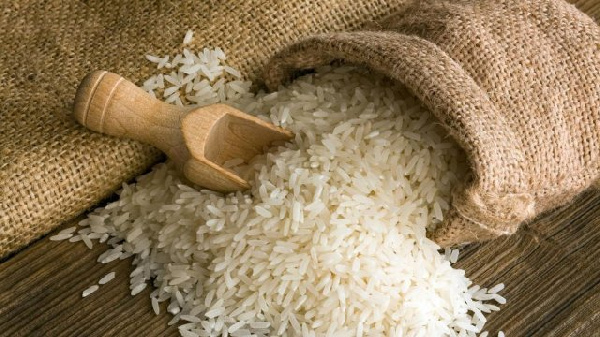
School authorities and student beneficiaries in the Ashanti Region have praised the World Food Programme’s (WFP) fortified rice initiative, calling for it to become the primary rice supplied under the Ghana School Feeding Programme due to its nutritional benefits.
The fortified rice programme, introduced by WFP in both public and private schools, aims to address longstanding micronutrient deficiencies among populations that rely heavily on rice as a staple. The fortification process adds essential vitamins and minerals to locally produced Ghanaian rice, either during milling or through heat extrusion.
The initiative is supported by the Foreign, Commonwealth and Development Office (FCDO), dsm-firmenich, and key government partners, including the Ghana School Feeding Programme, Ghana Education Service, Ghana Health Service, and Women in Agriculture Development.
At Ejisu Senior High/Technical School, Headmistress Grace Asamani highlighted the rice’s nutritional value, noting that initial student resistance was overcome through sensitisation. She explained that the school previously procured fortified rice directly from WFP-accredited suppliers, but now relies on government-supplied rice and would prefer fortified local rice over ordinary varieties.
“Our local rice has many benefits. Adopting it in schools will improve students’ nutrition while promoting Ghanaian produce,” she said.
Students Owusu Edna Beauty and Adjei Kwame Christian also endorsed the initiative, noting that consuming fortified rice helps them stay healthy and focused on their studies.
On the regional impact, Ashanti Regional School Health Education Coordinator Reverend Emmanuel Addo reported significant improvements in student health since the programme’s introduction. Cases of anaemia linked to poor diet have drastically declined, with none reported in beneficiary schools. Complementary initiatives, such as designated fruit and vegetable days, have further enhanced overall nutrition.
Reverend Addo urged the government to fully integrate fortified rice into the Ghana School Feeding Programme, stressing that local fortification and polishing would ensure students receive essential nutrients while supporting local agriculture.
Nationally, the WFP says the initiative targets 157,510 students in public schools, including over 111,000 basic school pupils and more than 46,000 senior high school students. In the pilot phase, 365 basic schools and 35 senior high schools across six regions, including Ashanti, Upper East, Upper West, Northern, Oti, and Greater Accra, were selected.
To strengthen local production and ensure sustainability, WFP has invested over $80,000 in fortification equipment for rice millers, including Franco Food Processing and Farms in the Ashanti Region. The programme has also supplied over 60 metric tonnes of fortified rice kernels to support production for school feeding.
In 2025 alone, rice millers in Ashanti and Upper East Regions supplied more than 170 metric tonnes of fortified rice to selected senior high schools, with additional production underway for private schools and vulnerable groups, including pregnant and breastfeeding women. The programme has reached nearly 59,000 pupils in low-fee-paying private schools, contributing to increased enrolment.
While stakeholders continue to support fortified rice consumption, they are calling on local processors and farmers to improve quality standards, particularly by removing stones and husks.
The WFP and its partners say the initiative demonstrates strong potential to improve child nutrition, enhance learning outcomes, and strengthen local food systems, with discussions ongoing to scale up the programme nationwide.
Comments