
The Bank of Ghana (BoG) has announced plans to discontinue its financing of the Ghana Gold Board (GoldBod) under a new gold policy aimed at reducing losses associated with the country’s gold trading operations.
According to the central bank, gold was often purchased from local miners at prices below prevailing world market rates, a practice that contributed to financial losses.
The International Monetary Fund (IMF), in its Staff Report for the Fifth Review of Ghana’s IMF-supported programme, revealed that losses incurred by the BoG from artisanal and small-scale doré gold transactions had reached US$214 million as of the end of September 2025, equivalent to GH¢2.43 billion.
Although GoldBod recorded profits, the IMF noted that these gains were largely realised at the expense of the central bank, which absorbed the bulk of the programme’s losses.
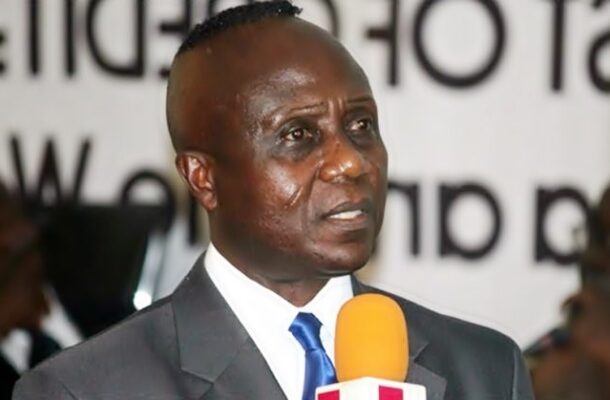
Speaking at a Strategic Policy Session on De-risking Ghana’s Gold Trade, organised by the Economic Governance Platform (EGP) on Tuesday, February 3, 2026, an Advisor to the Governor of the Bank of Ghana, Dr John Kwakye, explained that the losses were compounded by commissions paid by the BoG to GoldBod.
Addressing concerns over the losses, Dr Kwakye stressed that the gold trading programme delivered broader macroeconomic benefits, including a significant buildup of foreign exchange reserves.
“Despite the losses, the programme enabled the Bank of Ghana to accumulate nearly US$10 billion in reserves through gold trading. This has helped stabilise the currency, and the gains are reflected in improved macroeconomic stability,” he said.
He further linked the country’s improving economic outlook and the decline in headline inflation to the strength of Ghana’s reserve position.
Under the new arrangement, GoldBod will operate independently and receive direct funding from the government to purchase and refine gold from local miners.
“GoldBod will now act on its own, which means government will provide the initial funding. The Bank of Ghana will no longer finance these activities. GoldBod will therefore buy and refine gold directly from miners,” Dr Kwakye explained.
Parliament passed the Ghana Gold Board Bill, 2025, into law on Friday, March 28, 2025. The legislation mandates GoldBod to regulate, manage and oversee the buying, selling and export of gold and other precious minerals.
The Act designates GoldBod as the sole exporter of gold from Ghana’s small-scale mining sector, effectively preventing licensed traders and bullion dealers from exporting gold independently.
GoldBod was established on the initiative of President John Dramani Mahama as part of efforts to revitalise the local economy and operates under the Ministry of Finance.
Under Clause 68(1) of the Act, the hoarding of gold without authorisation from GoldBod is prohibited to prevent scarcity, unfair competition and price manipulation.
While direct buying and selling of gold on the open market is restricted under the law, foreigners may apply to GoldBod to purchase gold as off-takers. All such transactions must be conducted through GoldBod, which will also handle the export of gold to destinations specified by buyers.
Comments