
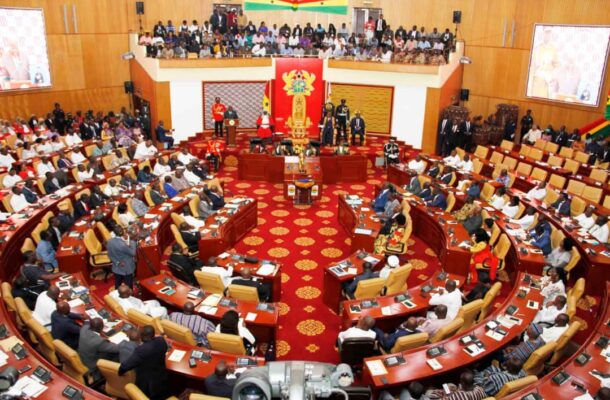
Ghana’s Parliament descended into a tense and emotionally charged debate as Members of Parliament traded sharp accusations over the recent terrorist attack in Burkina Faso that claimed the lives of eight Ghanaian tomato traders.
The Minority caucus called for swift and decisive action, demanding a parliamentary inquiry into the circumstances surrounding the killings, as well as compensation and state support for the bereaved families and injured survivors.
Raising the issue on the floor of the House, the Ranking Member on the Foreign Affairs Committee, Samuel Abu Jinapor, questioned whether Ghanaian authorities had acted on prior intelligence warnings about the deteriorating security situation in Burkina Faso.
“The Minority demands an immediate parliamentary enquiry into the circumstances surrounding this tragedy, including whether prior intelligence warnings existed and what steps, if any, were taken to protect Ghanaian traders operating in high-risk zones,” he said.
“We also demand full compensation and state support for the families of the deceased and the injured.”
Mr Jinapor stressed that the victims were civilians who played no role in the conflict across Ghana’s northern border.
“These traders are not combatants. They do not play any role in the conflict in Burkina Faso,” he added, warning that Ghanaian civilians had been exposed to heightened risk following developments in the Sahel.
He further referenced the political ties between Ghana and Burkina Faso, noting that President Ibrahim Traoré had been a special guest at President Mahama’s inauguration, amid security analysts’ warnings of potential spillover effects.
The debate, however, soon shifted from foreign policy and security to domestic agriculture.
An NDC Member of Parliament, Samuel Atta Mills, accused the previous administration of failing northern communities by abandoning the Pwalugu irrigation project, which he argued could have reduced reliance on imported tomatoes.
“The Pwalugu Dam was supposed to help us irrigate the land and grow tomatoes in the north. We spent about $12 million, and we have nothing to show for it,” he said.
“If this dam had been built, we would be able to grow our tomatoes up north.”
The remarks drew immediate resistance from the Minority Leader, Alexander Afenyo-Markin, who rejected claims of misappropriation and turned the spotlight on the government’s campaign promises.
“I challenge him to produce any evidence to show that any person abused any money,” he said.
“His party is now in government. Where is the 24-hour economy? Where is the one job, three shifts?”
The exchange intensified when Majority Leader Mahama Ayariga directly linked the deaths of the traders to the stalled irrigation project.
“If the Pwalugu multipurpose dam had been constructed, these women would not be going to Burkina Faso,” he argued.
“You took $12 million to do irrigation. You didn’t do it, and you drove these women into Burkina Faso to buy tomatoes, where they went and died. And now you want to play politics in this chamber.”
The heated debate underscored deep partisan divisions, even as calls grew louder for accountability, improved protection for Ghanaians operating in high-risk regions, and long-term solutions to agricultural and economic challenges driving cross-border trade.
Comments