
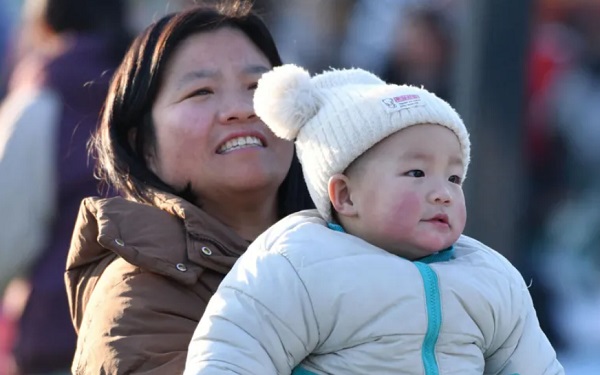
In a landmark move to combat declining birth rates, the Chinese government has introduced its first nationwide child subsidy, offering parents 3,600 yuan (approximately £375 or $500) annually for each child under the age of three.
The initiative aims to ease the financial burden of child-rearing and encourage larger families amid a deepening demographic crisis.
Despite abolishing the decades-long one-child policy nearly ten years ago, China has struggled to reverse its plummeting birth rates.
The new subsidy is expected to benefit around 20 million families and will be retroactively applied from the beginning of 2024.
Families with children born between 2022 and 2024 will also be eligible for partial payments.
Under the scheme, parents could receive up to 10,800 yuan in total per child.
The policy, announced by state broadcaster CCTV on Monday, reflects growing urgency from central authorities to address the country’s shrinking and ageing population.
Several local governments have already piloted similar incentives. For instance, Hohhot in northern China offers up to 100,000 yuan per baby for families with at least three children, while Shenyang, northeast of Beijing, provides a monthly payment of 500 yuan for third children under the age of three.
Beijing has also called on municipalities to introduce free preschool education as part of a broader effort to make parenthood more affordable.
According to a study by the YuWa Population Research Institute, raising a child to age 17 in China costs an average of $75,700—making the country one of the most expensive places to raise children relative to income.
China’s population has now declined for three consecutive years. In 2024, 9.54 million births were recorded—a slight uptick from the previous year—but the overall population continues to fall, intensifying concerns over economic sustainability and social welfare as the population ages rapidly.
Comments