















Cocoa Farmers ask Mahama to delay assent to new COCOBOD Bill
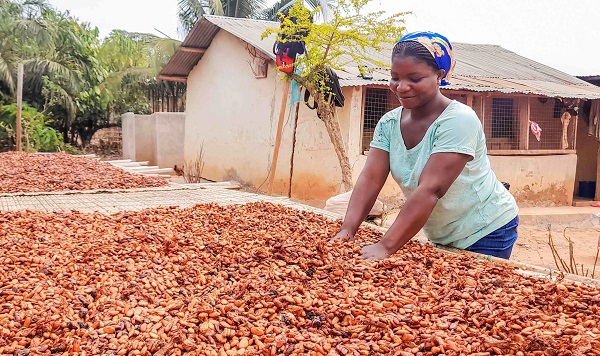
Cocoa farmers have appealed to President John Dramani Mahama to delay assenting to the Ghana Cocoa Board Bill, 2026, until broader consultations are held to address concerns over some of its provisions.
The Ghana Cooperative Cocoa Farmers and Marketing Association Limited says the proposed legislation, while important for protecting Ghana’s cocoa farms, could create difficulties for farmers whose farms have become economically unproductive.
Administrator of the Association, Moses Djan Asiedu, said farmers needed more education and engagement on the implications of the Bill before it becomes law.
“We have told COCOBOD that they should ask the President to hold on with the assent because there are issues of concern. The farmers do not understand the law fully, and there should be more engagement,” he told the Ghana News Agency.
A major concern raised by the farmers relates to provisions that classify cocoa farms as protected areas and restrict their conversion to other uses without approval from the Ghana Cocoa Board (COCOBOD).
According to Mr Asiedu, the lack of clear information about the legislation has created anxiety among farmers, particularly those operating farms that are no longer generating enough income due to declining yields and other production challenges.
He said discussions on social media and radio had also contributed to confusion, particularly over claims that farmers could be arrested for cutting down cocoa trees.
“What they have heard is that if you cut down cocoa, you will be arrested. That is how it has been presented, and it has created anger among farmers,” he said.
The Association has since engaged farmers in parts of the Western North Region, including Enchi, Dadieso, Asawinso and Sefwi, where concerns were raised about the potential impact of the legislation on livelihoods and land-use decisions.
Mr Asiedu said some farmers were particularly worried about what would happen when a cocoa farm stopped being commercially viable and the owner decided to replace the trees with another crop.
“Nobody wakes up and cuts down cocoa trees just like that. Farmers invest their lifetime in cocoa. But when a farm is no longer yielding and a farmer decides to cultivate another crop to sustain the family, why should that become a criminal offence?” he questioned.
The Ghana Cocoa Board Bill, 2026, was passed by Parliament on July 30 and is currently awaiting presidential assent.
Under the proposed law, all cocoa farms would receive protected status, while converting such farms to other uses would require approval from COCOBOD.
The Bill also prohibits the destruction of cocoa trees outside approved rehabilitation programmes.
In addition, mining, sand winning and other extractive or environmentally damaging activities would be prohibited on protected cocoa farms or within 500 metres of such farms.
Individuals involved in illegal extractive activities that damage protected cocoa farms or nearby water bodies could face prison sentences ranging from 10 to 20 years, fines imposed for each affected cocoa tree, or both.
Courts could also order the restoration of damaged farms or require offenders to compensate affected farm owners.
The proposed law is part of government efforts to protect Ghana’s cocoa-growing areas from illegal mining and other competing land uses that threaten the future of the sector.
While farmers acknowledge the need to protect cocoa farms, the Association wants government to address their concerns before the legislation takes effect.
Mr Asiedu said further consultation and public education would help farmers understand their rights and responsibilities under the proposed law while ensuring that measures intended to protect the cocoa industry do not inadvertently undermine the livelihoods of farmers.





Popular News
No trending posts found.