
Ghana’s governance system is facing renewed scrutiny following concerns raised by Transparency International Ghana over what it describes as increasing politicisation of the judiciary and law enforcement institutions.
In its commentary on the Corruption Perceptions Index (CPI) findings, the anti-corruption watchdog warns that recent political developments are deepening public perceptions of executive influence over institutions that are constitutionally mandated to operate independently.
At the centre of the controversy is the dismissal of the former Chief Justice, an unprecedented development that has triggered intense national debate about judicial independence and constitutionalism.
The action, coupled with a wave of petitions seeking the removal of heads of several independent state institutions, has, according to Transparency International Ghana, created the impression of a systematic attempt to subject key accountability bodies to political control.
This pattern, the organisation argues, undermines the foundational principles of separation of powers and weakens the integrity of the democratic governance architecture.
Independent institutions such as the judiciary, constitutional bodies, and law enforcement agencies are designed to function as checks on executive authority.
However, when leadership changes and removal processes are perceived as politically motivated, public confidence in their neutrality and credibility is significantly eroded.
Historically, Ghana has been regarded as one of West Africa’s relatively stable democracies, with a reputation for peaceful political transitions and respect for constitutional order.
Over the years, reforms have been introduced to strengthen judicial independence, protect the autonomy of accountability institutions, and insulate anti-corruption bodies from political interference.
These efforts were particularly pronounced after the 1992 Constitution, which established firm legal safeguards for institutional independence and separation of powers.
Despite these constitutional protections, the performance on the Corruption Perceptions Index over the past decade reveals a gradual decline in public trust in governance institutions.
After reaching a high point in 2014, the CPI score steadily dropped, reflecting growing concerns about corruption, weak enforcement of laws, and political influence over state structures.
The optimism that followed political change in 2017 briefly improved perceptions, but this momentum was not sustained, and the country’s CPI score has since stagnated.
Transparency International Ghana now links this stagnation not only to corruption in public administration but also to deeper structural governance problems, particularly the perceived erosion of institutional independence.
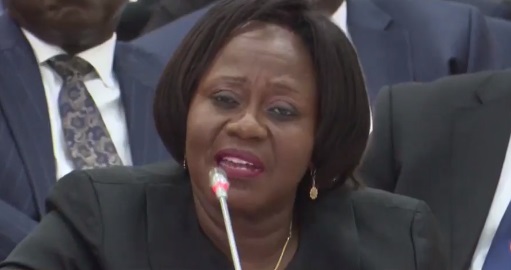
The dismissal of the former Chief Justice Gertrude Araba Esaaba Torkornoo and the growing number of petitions targeting heads of independent bodies are seen as emblematic of this broader trend.
According to the organisation, these developments risk normalising executive interference in institutions that should operate without political pressure, thereby weakening democratic checks and balances.
Over time, such practices could compromise the rule of law, politicise law enforcement, and transform anti-corruption mechanisms into tools of political contestation rather than neutral instruments of accountability.
The CPI assessment therefore frames Ghana’s corruption challenge not merely as an issue of bribery or financial misconduct, but as a governance crisis rooted in weakened institutions and shrinking civic trust.
Transparency International Ghana warns that unless independence of the judiciary and accountability bodies is firmly protected, anti-corruption reforms will remain ineffective, and public confidence in democratic governance will continue to decline.
Comments