
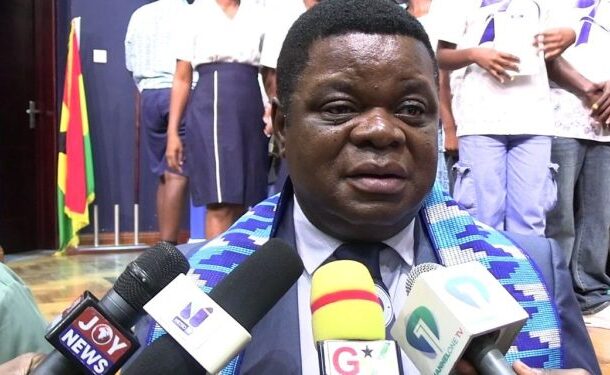
Former Director of the Institute of Statistical, Social and Economic Research (ISSER), Professor Peter Quartey, has urged the government to consider reducing taxes on petroleum products if global oil prices rise due to escalating tensions in the Middle East.
He argued that cutting taxes on fuel would help protect vulnerable households from the effects of rising energy costs.
Professor Quartey made the appeal in an interview with Citi Business News on the sidelines of a public lecture commemorating the 70th anniversary of Wesley Grammar School.
“Also for consumers, some of the taxes we have to look at. The tax on petroleum. If oil prices go up so high, we may want to look at the taxes and remove some in order to cushion the poor,” he said.
He also highlighted the importance of building strategic buffers to help the country absorb external shocks, particularly in the energy sector, where fluctuations in global oil prices can quickly impact domestic economic conditions.
“We have seen oil prices initially go up, but they are coming down. We have to study it carefully. But then it tells you that we need to build buffers. BOST was established to have these strategic reserves as buffers in case some of these things happen. Unfortunately, we have not been able to do that. This is a wake-up call to start gradually building up buffers. Should this happen, we will be able to cushion ourselves,” he added.
His remarks come amid growing concerns over the effect of geopolitical tensions in the Middle East on global crude oil supply and pricing. Industry analysts have already projected an increase in fuel prices in the second pricing window of March.
Comments