
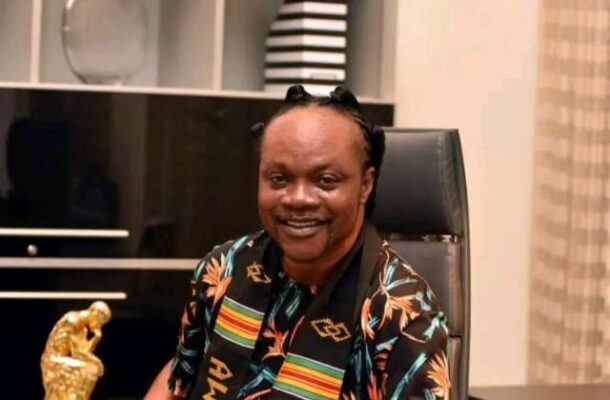
Few musicians in the history have shaped culture, politics, romance, and social commentary as profoundly as Daddy Lumba.
Born Charles Kwadwo Fosu on September 29, 1964, in Nsuta in the Ashanti Region, the man who would later become a highlife icon transformed the music industry for more than three decades, leaving behind a catalogue that many describe as unmatched.
Raised by teacher parents, Johnson Kwadwo Fosu and Comfort Gyamfi—popularly known as Ama Saah—young Charles grew up in an environment that valued education and discipline.
He attended Suame Methodist School in Kumasi before continuing to Adu Gyamfi Senior High School in Jamasi and later Juaben Secondary School, where he completed his secondary education in 1984.
The Birth of “Daddy Lumba”
It was during his teenage years that his passion for music blossomed. At just 16, he immersed himself in choir activities and talent performances, notably appearing at the Anokye Krom Cultural Centre with his group, the Nkwanta Wesley Singers.
His composition titled “Lumba Lumba,” written in solidarity with South Africa’s anti-apartheid struggle, gained regional popularity and earned him the nickname that would define his legacy—Daddy Lumba.
The Germany Years And Burger Highlife Breakthrough
After secondary school, he relocated to Germany with the support of a friend he later immortalised in song, Theresa Aberese.
In Germany, he met fellow Ghanaian musician Nana Acheampong, and together they formed the Lumba Brothers.
Their debut album, Yɛɛ Yɛ Aka Akwantuom (1989), resonated strongly with Ghanaians both at home and in the diaspora. The album’s themes of migration, struggle, and aspiration helped popularise the emerging Burger Highlife sub-genre, fusing traditional highlife with European production influences.
Solo Stardom And Commercial Dominance
After the group split, Daddy Lumba embarked on a solo career that would define the 1990s and 2000s.
His 1990 solo debut album, Obi Ate Meso Boɔ, featured the emotional hit “Theresa” and the lyrically profound “Ankwanoma.” From there, he released an astonishing stream of albums almost yearly.
Records such as Sika Asɛm (1991), Playboy (1992), and Mesom Jesus (1995) showcased his versatility—moving seamlessly between love ballads, social commentary, gospel reflections, and bold contemporary themes.
His 1998 smash hit “Aben Wo Ha” became a global anthem, cementing his commercial supremacy. The collaborative album Wo Ho Kyere with Ofori Amponsah in 1999 produced multiple classics and further strengthened his dominance.
In 2001, his album Poison delivered “Menya Mpo,” which, according to his longtime producer Kwaku Mensah, became his highest-selling album—outselling even the iconic “Aben Wo Ha.”
Awards, Politics And Cultural Influence
At the maiden Ghana Music Awards in 1999, Daddy Lumba won Artist of the Year, Album of the Year, and Most Popular Song of the Year. In 2003, he swept the Contemporary Highlife categories, reaffirming his status as the leading musical force.
Beyond entertainment, his music also intersected with politics. He publicly supported the presidential campaigns of Nana Addo Dankwa Akufo-Addo in 2008, 2012, 2016, and 2020 with the campaign anthem “Nana Yɛ Winner,” demonstrating the cultural reach of his artistry.
In recognition of his immense contribution, he received the Lifetime Achievement Award at the Ghana Music Awards in 2018 and was honoured with the Grand Medal at the 2024 National Honours and Awards ceremony.
Later Years And Health Battles
Though he maintained creative output into the 2010s with albums such as Awosoo (2014), Hosanna (2015), and Enko Den (2016), his health became a growing concern after 2013. He later revealed that he underwent spinal surgery following serious complications.
His final widely popular release, “Ɔfon Na Ɛdi Asɛm Fo,” arrived in 2022, a reminder of his lyrical sharpness and ability to spark conversation even in later years.
A Nation In Mourning
Daddy Lumba passed away on July 26, 2025, at Bank Hospital in Accra after a short illness. News of his death sent shockwaves across Ghana and the diaspora, triggering candlelight vigils, tribute concerts, and emotional public reactions.
For many Ghanaians, Daddy Lumba was more than a musician—he was a chronicler of life. His songs captured heartbreak, ambition, betrayal, faith, wealth, poverty, and politics with poetic honesty and bold creativity.
The Greatest of His Generation?
Often ranked by fans as Ghana’s greatest musical artiste of all time, Daddy Lumba’s legacy lies not just in the volume of his albums—over 30 studio projects—but in their depth and relatability. His ability to reinvent himself while maintaining lyrical substance ensured his relevance across generations.
In life, he was controversial, celebrated, criticised, and adored. In death, he remains immortalised in melody.
Daddy Lumba did not merely perform highlife—he redefined it. And in doing so, he etched his name permanently into the cultural history of Ghana.
Comments