
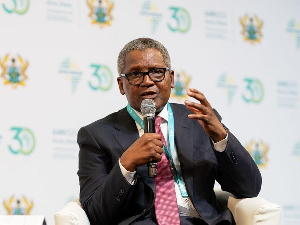
Africa’s richest man and President of the Dangote Group, Aliko Dangote, has attributed the price disparity between cement exported from Nigeria and what consumers pay locally to the country’s heavy tax regime and regulatory burden.
Speaking at a press conference, Dangote explained that exporting cement enables his company to avoid several taxes and levies that significantly increase production costs within Nigeria, making locally sold cement more expensive.
“When you look at my invoice, the cement I export is cheaper than the one I sell domestically,” he said. “In export, I save a lot of money. I’m not paying 30 per cent company income tax, 2 per cent education tax, 1 per cent health levy, 7.5 per cent VAT, or 10 per cent withholding tax.”
According to Dangote, the removal of these costs allows Nigerian cement to compete favourably in international markets against producers from countries such as Turkey, Russia and China.
“When you reduce all these taxes, I can afford to compete in the international market,” he noted.
Dangote argued that Nigeria’s fiscal structure has created a situation where it is cheaper to sell locally produced goods abroad than at home, highlighting deeper structural challenges within the economy. He added that Nigerian consumers ultimately bear the burden of high taxes, multiple levies and regulatory inefficiencies.
While local production is often promoted as a solution to high prices, Dangote’s experience, he said, shows how policy choices can undermine that objective.
Turning to the Dangote Refinery, he stated that the facility has addressed Nigeria’s long-standing fuel supply challenges, which have persisted since the early 1970s. Despite its potential to stabilise fuel supply, reduce pressure on foreign exchange, and create thousands of jobs, the refinery has faced criticism and resistance.
Some critics have raised concerns about market dominance, pricing power, and the concentration of such a strategic national asset in private hands, while others argue that fuel prices have not fallen as sharply or as quickly as expected.
Dangote, however, dismissed the criticism, insisting that the refinery has resolved a decades-old problem.
“Nigeria has had fuel queue problems since 1972. Somebody has addressed that problem, and instead of acknowledging it, people are calling the company names,” he said.
Comments