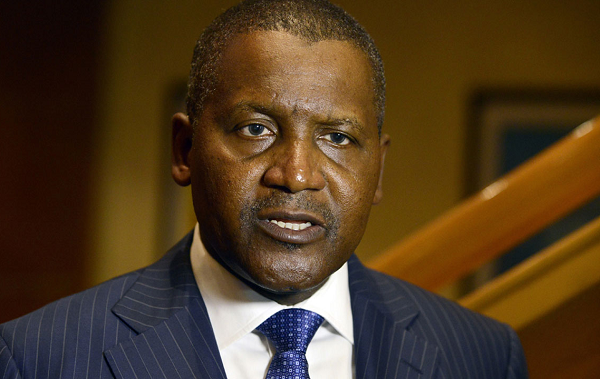
Africa’s richest man and founder of the $20 billion Dangote Refinery, Aliko Dangote, has spoken candidly about the persistent challenges confronting Nigeria’s oil and gas sector, blaming regulatory corruption, entrenched interests and sabotage for slowing progress in domestic refining.
Dangote said his relationship with oil marketers and regulatory bodies has remained strained since the refinery began operations, accusing some industry players of preferring fuel imports over local refining. According to him, this resistance has not only affected the refinery’s smooth operations but has also resulted in significant financial losses.
“For the marketers, I pray and wish they will even lose more, because I’m not printing money, I’m also losing money,” Dangote said. “They want imports to continue. I don’t think it is right. I must have a strategy to survive because $20 billion of investment is too big to fail.”
He described the situation as a prolonged “cat and mouse” struggle between his company and opposing interests within the oil sector, insisting that only one side would eventually back down.
“So we are in a situation where we will continue to play cat and mouse, and at the end of the day, somebody will give up—either we give up, or they will give up,” he stated.
Dangote also raised concerns about alleged sabotage of Nigeria’s state-owned refineries, particularly the Port Harcourt refinery. Citing information from former Nigerian National Petroleum Company Limited (NNPC) boss Mele Kyari, he claimed the facility suffered more than 100 acts of sabotage during rehabilitation efforts.
He alleged that similar interference has targeted the Dangote Refinery, revealing that key equipment had been stolen or deliberately damaged.
“In this refinery, we have lost around $82 million worth of stolen items,” Dangote disclosed, adding that a 400-ton boiler—described as the largest of its kind in the world—was among the equipment tampered with.
According to him, the perpetrators hoped such losses would trigger large insurance claims, leading to higher insurance premiums and increased operational costs for the refinery.
Dangote further warned of the influence of what he described as Nigeria’s “oil mafia,” claiming their power and reach surpass that of drug cartels.
“That’s why I told you the drug mafia is smaller than the people who are in oil and gas. In the oil sector, they have roped so many people in,” he said.
He noted that due to the scale of threats and interference, the refinery now employs more security personnel than operational staff, underscoring the severity of the situation.
Concluding his remarks, Dangote admitted that running a refinery is an extremely stressful undertaking and joked that he would only recommend such an investment to someone he considers an enemy, given the challenges involved.
Despite the obstacles, Dangote maintained that his refinery remains critical to Nigeria’s energy security and industrial future, insisting that domestic refining is the only sustainable path forward for Africa’s largest oil producer.
Comments