
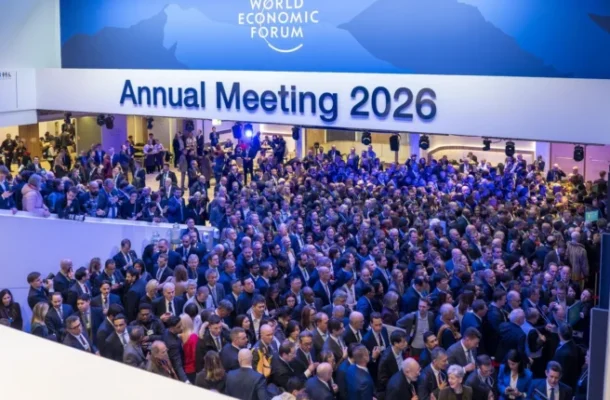
Davos 2026 alarms the world as global leaders warn that artificial intelligence is advancing faster than society’s ability to manage its impact on jobs, resources and human values.
A Warning Echoing from the Alps
Davos 2026 alarms the world with a sobering message from the snow-covered Swiss Alps: artificial intelligence is no longer a distant promise but a dominant force reshaping modern life, and humanity may be struggling to keep pace. At this year’s World Economic Forum (WEF), some of the most influential voices in business and technology cautioned that the true risk of AI lies not in how fast it evolves, but in how responsibly — or irresponsibly — it is deployed.From factory floors to classrooms, hospitals to power grids, the AI revolution is touching every corner of society. The challenge, leaders warned, is ensuring that innovation does not outstrip ethics, governance and human well-being.
Davos 2026 Alarms the World Over Responsible AI Use
During a high-level panel titled Innovation in a Multipolar Era, executives from multinational firms including Dow, EY and NTT Data debated the opportunities and dangers presented by advanced AI systems. While there was broad agreement that artificial intelligence could unlock unprecedented productivity and efficiency, there was also unease about its unintended consequences.
Abhijit Dubey of NTT Data delivered one of the forum’s starkest warnings, arguing that AI represents the first major technology in human history that will not be fully controlled by its creators. Unlike earlier industrial tools, AI systems can learn, adapt and act in ways that are difficult to predict.
“This lack of direct human control,” he suggested, “creates risks that institutions are not yet equipped to manage.”
Energy, Water and the Hidden Cost of Intelligence
Beyond social disruption, experts at Davos highlighted the environmental footprint of artificial intelligence. Training and operating large AI models requires enormous amounts of energy, vast quantities of water for cooling data centres, and access to rare minerals critical for advanced computing hardware.
As nations race to build digital infrastructure, concerns are growing that AI could intensify competition for already strained natural resources. Several speakers noted that without clear sustainability standards, the technology designed to optimise the world could end up accelerating environmental damage.
Jobs, Automation and a Workforce in Transition
Perhaps the most pressing concern raised at Davos 2026 was the future of work. Automation powered by AI is expected to transform the global labour market at a scale unseen since the Industrial Revolution.
According to Dubey, roles focused on repetitive tasks are most vulnerable, but the shift could also create new opportunities. For every job displaced, he argued, one or two new roles may emerge — particularly in managing, supervising and collaborating with intelligent systems.
However, delegates acknowledged that this transition will be painful without strong policy support. Reskilling programmes, education reform and social safety nets were repeatedly cited as essential tools to prevent widening inequality.
Taxing AI and the Race Against Time
Among the more controversial ideas discussed was the proposal to tax AI agents — a financial mechanism designed to offset the social costs of automation. Proponents argue such taxes could fund retraining programmes and protect vulnerable workers, while critics warn they could stifle innovation.
What united participants was a sense of urgency. Leaders agreed that no government is fully prepared for the scale of disruption ahead, and that waiting for crises to emerge would be a costly mistake.
Putting Humans at the Centre of the AI Era
As Davos 2026 alarms the world, the closing message from the forum was unmistakable. Artificial intelligence will transform economies, societies and daily life, but its ultimate success will not be measured by speed or profit alone. Instead, it will depend on whether institutions, businesses and governments can ensure that human values remain at the heart of the AI revolution.
The future, delegates warned, is being written now — and the choices made today will define whether AI becomes humanity’s greatest ally or its most destabilising force.
Comments