
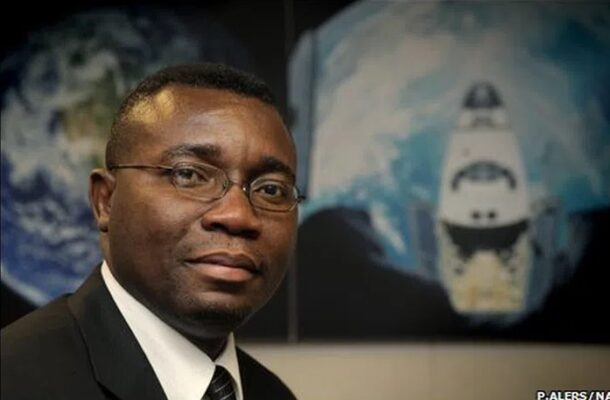
Ave Kludze Jr. has made history as the first Ghanaian—and possibly the first African—to command and control a spacecraft in orbit from a NASA mission control centre, marking a remarkable milestone in global science and engineering.
His achievement stands as one of Africa’s most inspiring contributions to space exploration, reflecting a journey defined by curiosity, resilience, and technical excellence.
Born in Hohoe in Ghana’s Volta Region and raised in Dansoman, Accra, Kludze showed an early fascination with how things worked, often dismantling radios and televisions to understand their inner workings.
Though his family expected him to pursue a career in law—following his father, a Supreme Court judge—his passion for engineering ultimately shaped his path.
After completing his education at Adisadel College and Swedru Secondary School, he moved to the United States in the late 1980s to study electrical engineering at Rutgers University.
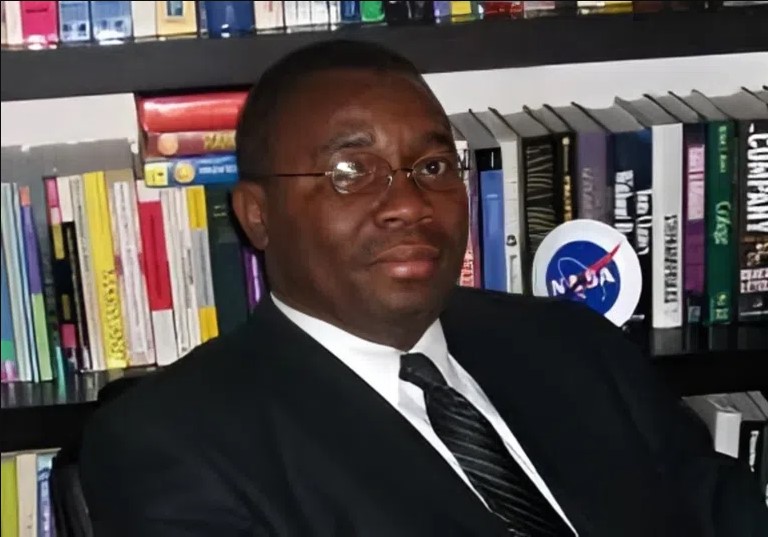
He later earned advanced degrees from Johns Hopkins University and George Washington University.
Kludze joined NASA in 1995, a turning point that launched his career in space systems engineering. Over the years, he played a critical role in commanding multiple spacecraft missions, including ACE, SAMPEX, GRO, and the CALIPSO environmental satellite—demonstrating exceptional expertise in real-time spacecraft operations.
Beyond mission control, he has contributed significantly to innovation in aerospace technology.
His work includes co-developing an infrared camera used by astronauts during spacewalks to detect structural damage, as well as designing systems that utilise satellite communication and GPS for tracking and safety purposes.
His excellence has been recognised with multiple honours, including the NASA Superior Accomplishment Award and the NASA Award for Outstanding Performance.
He has also contributed to major strategic initiatives, including studies on Mars transportation and hypersonic travel.
Today, Kludze serves as a senior technical advisor within NASA, helping shape future space exploration strategies.
His journey—from a curious boy in Dansoman to a leading figure in space engineering—remains a powerful symbol of what is possible through determination and intellectual curiosity.
Comments