
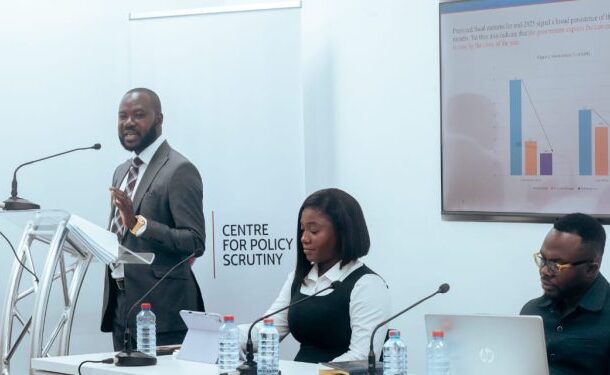
The Centre for Policy Scrutiny (CPS) has praised the 2026 budget and economic policy as a significant milestone for Ghana’s economic recovery, highlighting strong disinflation trends and falling interest rates as key drivers for growth next year.
In a review presented at a media briefing on Thursday, November 20, 2025, CPS noted that the government’s fiscal and monetary policies are beginning to yield positive results, particularly in stabilizing prices and reducing borrowing costs.
“Ghana is experiencing a welcome period of strong disinflation and lower interest rates, which together lay the foundation for a robust economic recovery in 2026,” said Dr. Adu Owusu Sarkodie, Executive Director. “These developments reflect fiscal prudence and monetary discipline, creating an environment conducive to private sector-led growth and job creation.”
The review highlighted several areas of the 2026 budget that underpin this optimism. Targeted fiscal measures aimed at improving revenue collection while controlling non-essential spending have helped maintain macroeconomic stability. Additionally, the Bank of Ghana’s projected reduction in the policy rate is expected to lower borrowing costs, stimulating investment in sectors such as agriculture, manufacturing, and housing.
CPS also noted the budget’s focus on infrastructure development, including roads, energy projects, and urban housing, describing these initiatives as strategically aligned with Ghana’s medium-term economic recovery plan and the government’s sustainable development goals.
However, CPS cautioned that recovery is not without risks. External factors such as global commodity price volatility and potential changes in international financing conditions could affect domestic economic performance. The organisation stressed the need for continued reforms to strengthen revenue mobilisation, improve public sector efficiency, and support private sector resilience.
Dr. Sarkodie also commended the government’s efforts to improve the business environment, noting that lower interest rates could ease credit access for small and medium enterprises (SMEs), key drivers of employment and innovation. “If properly harnessed, these lower financing costs could accelerate entrepreneurship, industrialisation, and job creation, delivering tangible benefits to ordinary Ghanaians,” he said.
CPS further emphasised that the success of the 2026 economic strategy depends on transparent policy implementation and close monitoring of fiscal and monetary developments. The organisation encouraged ongoing engagement with stakeholders—including civil society, the private sector, and development partners—to ensure that policies remain inclusive and responsive to the country’s evolving economic needs.
Comments