Fisheries Ministry steps up efforts to protect Premix Fuel subsidy from abuse
The Ministry of Fisheries and Aquaculture Development has intensified measures to protect Ghana’s premix fuel subsidy programme and ensure that its benefits reach legitimate fisherfolk across the country.
The move forms part of ongoing efforts to enhance transparency, accountability, and efficiency in the distribution of subsidised premix fuel within fishing communities.
As part of these efforts, the Chamber of Oil Marketing Companies (COMAC), led by its Chief Executive Officer, Dr Riverson Oppong, paid a courtesy call on the Minister for Fisheries and Aquaculture Development, Emelia Arthur, to discuss growing concerns over the diversion, hoarding, and misuse of premix fuel.
During the meeting, Dr Oppong emphasised that the subsidy programme was introduced to make fuel affordable and accessible for small-scale fishers and canoe operators, helping to sustain livelihoods in coastal and inland fishing communities.
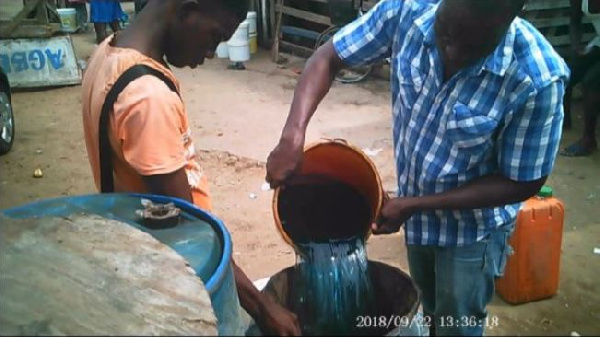
He, however, expressed concern that the programme’s objective is being undermined by individuals who divert fuel intended for fisherfolk and resell it at inflated prices for personal profit.
According to him, the subsidy is strictly intended to support fishing activities and should not be exploited for commercial gain. He called for stronger collaboration between COMAC and the Ministry to tackle illegal practices and improve accountability within the fuel distribution chain.
Dr Oppong further noted that challenges such as fuel diversion, hoarding, and unaccounted-for losses require urgent attention, describing them as serious regulatory and law enforcement issues that threaten the integrity of the subsidy programme.
In response, Minister Emelia Arthur reaffirmed the Ministry’s commitment to eliminating illegalities within the premix fuel distribution system.
She revealed that the Ministry, working closely with the Premix Fuel Secretariat, has intensified monitoring activities and is actively tracking individuals suspected of engaging in unlawful practices.
The Minister also assured COMAC of the continued support of the Fisheries Enforcement Unit (FEU) in investigating and prosecuting offenders, stressing the government’s determination to safeguard the subsidy scheme.
She reiterated that the Ministry remains committed to ensuring that subsidised premix fuel reaches its intended beneficiaries—fisherfolk—and is not diverted for unauthorised profit-making activities.
Meanwhile, observations by the Ghana News Agency (GNA) in the Anloga District of the Volta Region indicate that premix fuel distribution is generally being carried out in accordance with established regulations.
Although no recent cases of fuel diversion or hoarding have been reported in the district, there have been unverified allegations of overpricing.
To strengthen accountability, the District Chief Executive for Anloga, Sandra Kpedor, has conducted a series of engagements at landing beaches to promote compliance and improve oversight of premix fuel distribution.
Fisherfolk interviewed at various landing beaches acknowledged that while fuel supplies are not always consistent, periodic deliveries have largely been sufficient to support their fishing operations and livelihoods.
Premix fuel is a government-subsidised blend of petrol and premix oil used to power outboard motors in Ghana’s artisanal fishing sector. The programme is designed to make fuel more affordable for small-scale fishers and is administered through Landing Beach Committees (LBCs), which distribute fuel based on community needs, including fleet size and fishing activity.
Under the current arrangement, approximately 53 per cent of premix fuel sales margins are channelled into community development projects such as schools, health facilities, and markets in fishing communities. The distribution system is regulated under the National Premix Fuel Committee Regulations, 2016 (L.I. 2233).





Popular News
No trending posts found.