
The cocoa industry, long regarded as the backbone of rural livelihoods and a pillar of the national economy, is facing one of its gravest crises in decades, as mounting debts and unpaid obligations threaten to paralyse the entire value chain.
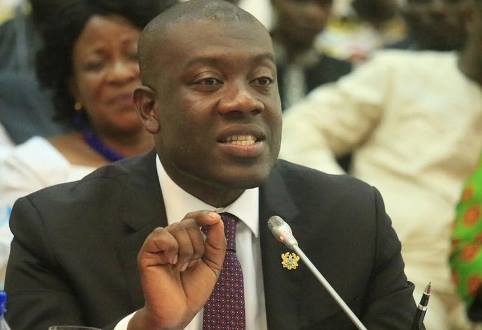
The Ranking Member on Parliament’s Economy and Development Committee, Kojo Oppong Nkrumah, has issued a stark warning that without urgent government intervention, the sector risks long-term damage that could push farming communities deeper into poverty and drive young people away from cocoa farming altogether.
At the centre of the crisis is the financial distress of the Ghana Cocoa Board (COCOBOD), which has struggled to meet its obligations to key players in the cocoa value chain.
Since November 2025, Licensed Buying Companies (LBCs) have reportedly purchased approximately GH¢10 billion worth of cocoa from farmers across the country.
However, those beans remain largely unpaid for, creating a liquidity bottleneck that has frozen the movement of cocoa from farms to warehouses and onward to export markets.
Speaking on TV3 Hot Issues, Oppong Nkrumah, MP for Ofoase Ayirebi insists the crisis is not theoretical—it is already being felt in farming communities.
LBCs, unable to receive payment from COCOBOD for cocoa already delivered, are stuck with stock they cannot evacuate and funds they cannot recycle. As a result, they cannot return to farming communities to buy new cocoa from farmers who have already harvested and dried their beans.
The effect, he warned, is a “frozen value chain,” where cocoa sits idle, incomes dry up, and poverty begins to spread across rural areas that depend almost entirely on cocoa for survival.
This situation has been worsened by what the Minority describes as inadequate government response.
While the government recently announced a GH¢1.091 billion payment to LBCs—made up of GH¢237 million for 50,000 metric tonnes of cocoa and a subsequent GH¢854 million disbursement—Oppong Nkrumah dismissed the amount as grossly insufficient compared to the estimated GH¢10 billion debt.
He described the payment as “a drop in the ocean,” arguing that it does little to unlock the liquidity crisis choking the sector.
Beyond the immediate financial strain, the Ranking Member warned of deeper social and structural consequences.
He cautioned that if cocoa farming continues to be characterised by delayed payments, uncertainty, and declining incomes, fewer young people will be willing to take up cocoa cultivation.
This, he said, could accelerate rural poverty, weaken Ghana’s long-term cocoa production capacity, and undermine the sustainability of the entire sector.
Oppong Nkrumah also linked the current crisis to policy failures and governance challenges, arguing that the focus on price reviews and future reforms is misplaced when the present system is already collapsing under unpaid debts.
He insisted that the first and most urgent step must be a direct government bailout of COCOBOD, enabling it to clear outstanding payments to LBCs so that money can flow back to farmers and normal trading can resume.
In addition, he has demanded transparency from the government regarding the widely publicised GH¢1.2 billion debt payment, calling for full disclosure of the actual total debt owed and a clear, time-bound strategy for settling all outstanding obligations to the cocoa sector.
Without this, he warned, any talk of reforms or restructuring would be meaningless.
The crisis is unfolding against a broader historical backdrop of persistent financial challenges within COCOBOD, recurrent debt cycles, and long-standing structural weaknesses in cocoa financing.
Successive administrations have grappled with balancing farmer welfare, sector sustainability, and international market pressures.
However, the current liquidity crunch has exposed how fragile the system has become, particularly when payments to farmers and buyers break down.
Comments