
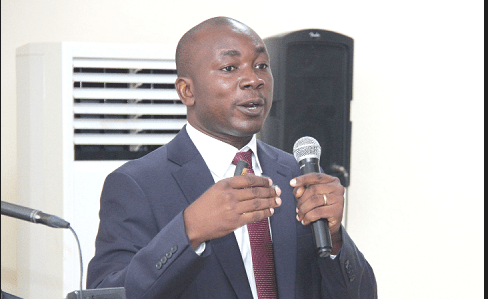
Economist Professor Godfred Bokpin has endorsed the World Bank’s view that Ghana’s 2022 economic collapse was the product of years of weak fiscal management rather than external shocks such as the COVID-19 pandemic or the Russia-Ukraine war.
Speaking in an interview cited by myjoyonline.com, Prof. Bokpin described the crisis as “an accident waiting to happen.”
“The World Bank is right. COVID-19 did not initiate Ghana’s economic vulnerability; it only magnified it. The real cracks were already visible by the third quarter of 2021,” he explained.
According to him, Ghana’s troubles deepened in 2021 when international investors shut the country out of the capital markets after identifying deep structural weaknesses. By then, the government’s own debt sustainability analysis showed that nearly all key indicators had been breached, yet debts contracted by state-owned enterprises such as Cocobod were kept off the official books to project a false sense of stability.
Prof. Bokpin also pointed to the Bank of Ghana’s extraordinary financing of government operations after Ghana lost market access. He disclosed that the central bank printed more than GH¢40 billion, with government’s exposure to the Bank eventually climbing to GH¢77.6 billion, which later had to be restructured.
By the time Ghana turned to the International Monetary Fund (IMF) for support, the country’s debt-to-GDP ratio had reached 109% in present value terms, while its debt service-to-revenue ratio had surged to between 22% and 25%, far above the 18% sustainability threshold.
“Once we lost market access, we were exposed both internationally and domestically. We were priced out of long-term borrowing and forced to rely on short-term treasury bills,” he said.
For Prof. Bokpin, the 2022 meltdown was not caused by external shocks but by long-standing fiscal indiscipline, reckless debt accumulation, and poor accountability.
“It is not necessarily COVID that exposed us. We had created this ourselves, and it was only a matter of time,” he stressed.
Comments