As Côte d’Ivoire prepares for a highly contentious presidential election in October 2025, political uncertainty has already spilled across its borders, with Ghana emerging as a refuge for Ivorians fearing potential unrest.
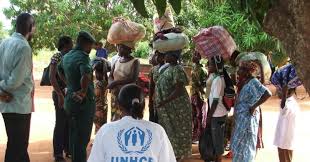
According to the Ghana Refugee Board, 172 Ivorians have arrived in Ghana over the past two weeks, seeking asylum at the Ampain Refugee Camp in the Ellembelle District of the Western Region.
The Executive Secretary of the Refugee Board, Tetteh Padi, confirmed that the asylum seekers cite growing political tension in their home country as the reason for fleeing.
“They believe the situation could deteriorate in the run-up to the elections, so they have come into Ghana for safety,” explained.
He noted that the refugees have been registered as asylum seekers and are receiving shelter and basic support at the camp, although food assistance has not yet been provided.
Ghana’s Refugee Burden
Ghana has long been a host country for displaced persons from conflict-prone regions of West and Central Africa.
The Ampain Camp, established during the 2010–2011 Ivorian crisis, remains the country’s largest refugee settlement. It has hosted thousands of Ivorians over the past decade, many of whom fled the bloody conflict that erupted after former President Laurent Gbagbo refused to concede defeat to Alassane Ouattara in 2010.
That standoff left an estimated 3,000 people dead and displaced over a million across the sub-region.
Even before the arrival of the latest group, the camp already accommodated refugees from countries such as Sudan, who continue to trickle into Ghana in smaller numbers.
Padi stressed that while the numbers from Côte d’Ivoire remain manageable, authorities hope they will not rise significantly in the coming weeks.
Political Uncertainty in Côte d’Ivoire
The upcoming Ivorian election is already proving divisive. President Alassane Ouattara, who first took office in 2011, has announced his intention to contest for a fourth term.
The decision has sparked anger among sections of the electorate and opposition parties, some of whom accuse the government of manipulating the process by barring key rivals from contesting.
This political climate has rekindled memories of past violence and heightened fears of another post-election crisis.
Analysts warn that even the perception of instability can trigger cross-border displacement, as seen in the current wave of asylum seekers entering Ghana.
Peaceful Outcome
Ghanaian authorities are cautiously optimistic that the situation will not escalate further.
“If the elections pass peacefully, we expect the refugees to return to their home country,” Padi said.
For now, however, Ghana is bracing itself for a possible increase in arrivals as Côte d’Ivoire edges closer to what many see as a critical test of its democratic stability.
The United Nations High Commissioner for Refugees (UNHCR) is expected to monitor the situation closely, working with Ghana’s Refugee Board to provide humanitarian support should the crisis deepen.
Comments