
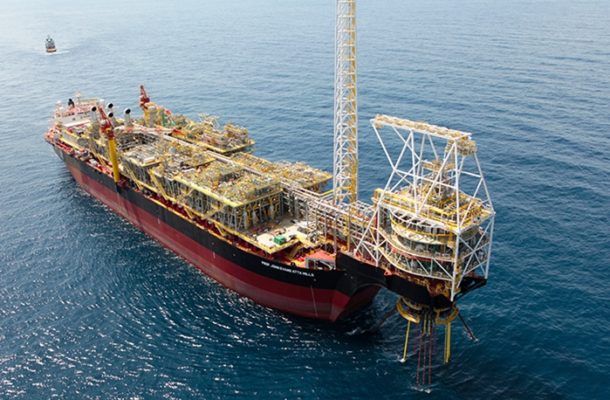
The Government of Ghana has extended petroleum agreements for the country’s flagship offshore oil fields to 2040, securing a larger future state stake while introducing new gas payment safeguards, a move aimed at recalibrating long-term fiscal returns from the sector.
Following parliamentary ratification, Tullow Oil plc confirmed that the extension applies to the West Cape Three Points and Deep Water Tano agreements, which govern the Jubilee and TEN fields, extending them to December 31, 2040.
Under the revised terms, the Ghana National Petroleum Corporation (GNPC) will increase its participating interest by an additional 10 percentage points from July 20, 2036, with joint venture partners diluted on a pro-rata basis. The structure allows Ghana to secure a higher long-term equity position without an immediate fiscal outlay while providing Tullow with tenure certainty over its core producing assets.
The parties also agreed on revised terms for Jubilee gas supply through 2040, setting an escalating price of US$2.50 per mmbtu, and introduced a gas payment security mechanism to address persistent delays in state-related receivables, including potential TEN field gas supply.
Tullow CEO Ian Perks stated that the ratification secures the company’s long-term operating position and supports continued investment in Jubilee and TEN. He described the payment security provisions as part of a stable investment framework agreed with the government and joint venture partners, adding that the agreements underpin responsible resource development and a stable investment environment.
The extension comes as Tullow consolidates its portfolio in Ghana following asset sales in Gabon and Kenya. In 2025, the company’s working interest production averaged about 40,400 barrels of oil equivalent per day, including roughly 7,100 barrels per day of gas. Jubilee field output averaged about 60,900 barrels per day, while TEN produced approximately 16,000 barrels per day, supported by strong well performance, including the J72-P well brought onstream in July, despite a 15-day planned shutdown at Jubilee. Floating production, storage and offloading vessel uptime across both fields averaged 97 percent.
Financially, Tullow recorded 2025 revenue of around US$847 million at an average realised oil price of US$67.8 per barrel, with free cash flow of about US$100 million, below earlier guidance. The shortfall was attributed to lower oil prices in the year’s final months, delayed payments from the government of Ghana, and postponed proceeds from the Kenya asset sale. Receivables due from Ghana totaled about US$225 million at year-end, including US$110 million in gas payments, US$65 million in cash calls, and US$50 million linked to TEN development debt. The company is working with state agencies to resolve these balances.
Net debt declined to approximately US$1.35 billion at the end of 2025, with liquidity exceeding US$300 million. Tullow also extended its senior secured notes to November 2028, its Glencore facility to May 2030, and agreed on a new US$100 million cargo pre-payment facility to strengthen short-term liquidity.
Independently audited 2P reserves fell sharply to 100.4 million barrels of oil equivalent from 164.5 million a year earlier, reflecting production, the sale of Gabonese assets, and downward revisions at Jubilee and TEN. Remaining 2C resources of about 200 million barrels of oil equivalent present opportunities for growth in Ghana through infill drilling, subsea pumps, and potential monetisation of TEN gas.
The extension enhances medium-term production visibility from the country’s two largest offshore fields while gradually expanding sovereign participation. The deferred increase in GNPC’s stake from 2036 reflects a strategy to increase long-term resource capture without disrupting current investment flows.
Tullow forecasts 2026 working interest production to average between 34,000 and 42,000 barrels per day, including about 6,000 barrels per day of gas. Five Jubilee wells, including four producers and one water injector, are scheduled to come onstream. Capital expenditure is projected at approximately US$200 million, with pre-financing cash flow for 2026 expected to range between US$150 million and US$180 million at US$65 per barrel. The company cautioned that cash flow could decline by roughly US$40 million at US$60 per barrel and by a further US$20 million at US$55 per barrel, highlighting sensitivity to oil price movements.
Comments