















Ghana spends $168m on tomato imports as ginger imports exceed 99% — CSIR
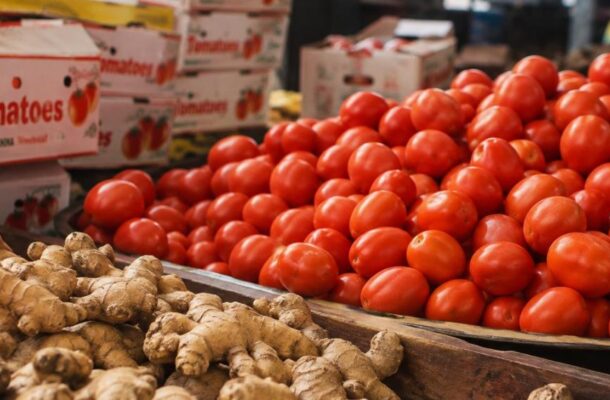
Ghana spends at least US$168 million annually on fresh and processed tomato imports, while a disease outbreak has left the country more than 99 percent dependent on imported ginger.
The figures, disclosed by researchers at the Council for Scientific and Industrial Research (CSIR), highlight the country’s growing dependence on imported horticultural products and the foreign exchange cost of inadequate domestic production.
The researchers made the disclosure during the second session of the 2026 Ministry of Environment, Science, Technology and Innovation (MEST) Visibility Webinar Series, held on the theme, “CSIR’s Interventions on Tomato and Ginger.”
Dr Michael Kwabena Osei, Principal Research Scientist and vegetable breeder at the CSIR Crop Research Institute, said Ghana’s annual demand for fresh and processed tomatoes exceeds 1.4 million metric tonnes.
However, local farmers produce only about 15 to 18 percent of the country’s total requirement.
According to Dr Osei, Ghana imports between 100,000 and 120,000 metric tonnes of fresh tomatoes annually, mainly from Burkina Faso, at a cost of approximately US$18 million.
The country also imports processed tomatoes, largely from China and Europe, equivalent to an estimated 400,000 to 450,000 metric tonnes of raw tomatoes, costing about US$150 million each year.
The combined cost of fresh and processed tomato imports therefore stands at approximately US$168 million annually.
More than 60 percent of fresh tomato imports enter Ghana between November and April, a period when domestic production declines significantly due to the dry season.
Dr Osei said the import figures reflect a major gap between Ghana’s agricultural potential and actual production, despite the country having more than 400,000 hectares of arable land suitable for tomato cultivation.
He noted that average tomato yields remain between seven and 10 tonnes per hectare, far below the potential 20 to 80 tonnes per hectare that can be achieved through improved varieties and better farming practices.
The researchers identified poor access to quality seeds, inadequate irrigation, declining soil fertility, pests and diseases, and weak extension services among the key challenges affecting tomato production.
Ghana’s heavy reliance on imported planting materials is also putting additional pressure on farmers.
Dr Osei said more than 85 percent of tomato seeds planted in Ghana are commercial hybrid varieties, increasing production costs and exposing farmers to external supply disruptions.
“A country that imports its seed will always import its food,” he said.
He also identified the underutilisation of irrigation infrastructure as a major obstacle to year-round tomato production.
Of the 15,000 hectares covered by 22 public irrigation schemes, only about 9,000 hectares are currently being utilised.
Ginger imports exceed 99%
The situation in the ginger sector is even more critical following a bacterial wilt outbreak that severely affected local production.
Dr Osei said Ghana’s annual ginger demand increased from about 18,000 tonnes in 2020 to between 30,000 and 32,000 tonnes in 2025.
However, the outbreak of bacterial wilt in 2022 caused a sharp decline in domestic production, leaving Ghana more than 99 percent dependent on imported ginger.
The country now spends about US$500,000 annually on ginger imports, mainly sourced from China, Nigeria and Burkina Faso.
The production crisis has also contributed to a sharp increase in ginger prices on the local market.
According to the researchers, the price of a sack of ginger rose from about GH¢250 in 2022 to approximately GH¢4,000 in 2025 and had reached GH¢6,000 or more by the time of the webinar.
The researchers explained that bacterial wilt is soil-borne and can spread through infected planting materials, poor drainage, heavy rainfall, continuous cultivation of the same crop and contaminated farm equipment.
To revive the sector, CSIR researchers are advocating the development and adoption of disease-resistant ginger varieties, the production of disease-free planting materials through tissue culture, stronger disease surveillance and improved extension services for farmers.
Call for stronger investment
The researchers said the challenges facing the tomato and ginger sectors demonstrate the broader economic cost of Ghana’s weak agricultural value chains.
While Ghana has significant land and production potential, inadequate access to quality planting materials, irrigation, technology, research and financing continues to undermine local production and increase reliance on imports.
They are therefore calling for increased investment in certified seed production, irrigation infrastructure, soil improvement, mechanisation and protected cultivation.
Dr Osei has also proposed the establishment of a Tomato Board by 2028 and a dedicated Horticultural Research Institute by 2030 to coordinate research, seed development, processing, financing and market integration.
The researchers believe such interventions could help Ghana reduce its dependence on imported food, strengthen local agricultural value chains and retain more foreign exchange within the economy.






Popular News
No trending posts found.