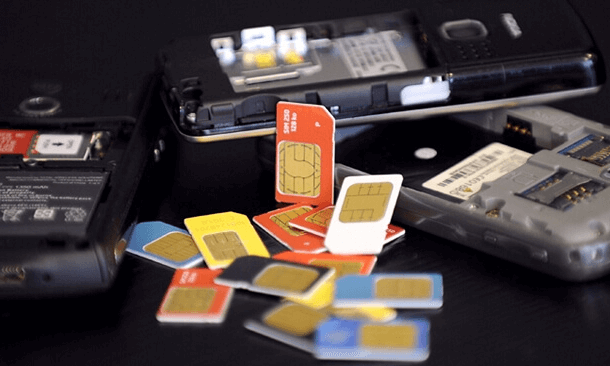
Samuel Nartey George, Minister of Communications, has announced that Cabinet has approved a completely new national SIM registration exercise, following an extensive review of the previous process.
Speaking during high-level talks with the Ghana Chamber of Telecommunications and the National Communications Authority (NCA), Mr George explained that the earlier registration drive faced multiple challenges, including weak biometric enforcement, data inconsistencies, and cases of registration fraud.
He emphasised that the new exercise will not continue the old system but will represent a full reset aimed at restoring credibility and strengthening security in SIM registration.
Key Features of the New SIM Registration Exercise
According to Mr George, the National Communications Authority will serve as the central repository for all SIM registration data. Biometric verification will be mandatory under the new framework to enhance security.
“A Central Equipment Identity Register (CEIR) will be introduced to enable cross-network blocking of stolen or fraud-linked devices,” he added.
The Minister also disclosed that a revised Legislative Instrument (L.I.) is being prepared to regulate the new exercise.
Telecom operators welcomed the initiative but highlighted operational concerns. Details such as the exercise’s start date and cost of implementation are yet to be confirmed. This initiative marks Ghana’s second nationwide SIM registration drive, following a 2021 exercise that the current administration said was beset by challenges.
5G Deployment and Spectrum Auction
On 5G rollout, Mr George revealed that Cabinet has approved the removal of the exclusivity clause under the previous wholesale 5G framework. This change paves the way for a competitive spectrum auction while retaining the wholesale model. The revised approach will support network-based deployment to ensure universal coverage across operators.
A new 5G spectrum auction is expected to be conducted soon, with coordination measures in place to prevent market distortions.
Telecom operators raised concerns about the high capital costs associated with 5G, including spectrum acquisition, network upgrades, and infrastructure expansion. They called for reasonable spectrum pricing, predictable policy direction, and streamlined regulatory approvals to enable rapid deployment.
Next Steps
The meeting also covered Cabinet-approved reforms aimed at strengthening national security, improving quality of service, and accelerating Ghana’s digital transformation.
It concluded with an agreement for structured technical engagements among the Ministry, NCA, the Telecoms Chamber, and operators to refine the implementation framework for both the SIM registration exercise and the 5G spectrum auction. Immediate next steps include finalising the revised Legislative Instrument and publishing the auction documentation.
Comments