
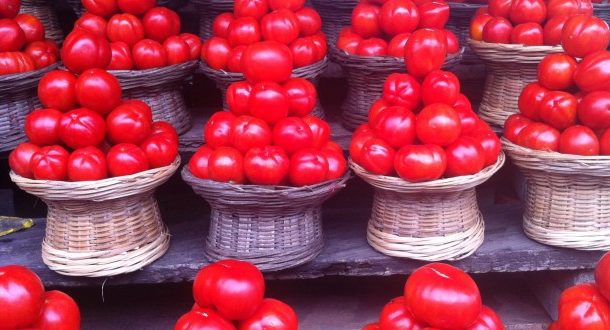
Tomato traders in Ghana say poor quality and high post-harvest losses of locally produced tomatoes are driving their reliance on imports from Burkina Faso, even as a new export ban from the Sahelian country threatens supply.
Speaking on Joy News’ PM Express, Eric Tuffour, President of the Tomato Importers Association, explained that Ghanaian tomatoes often fail to meet traders’ needs due to their short shelf life.
“The Ghanaian tomato is too watery, and when transported, it quickly deteriorates,” he said.
His remarks come after Burkina Faso announced a suspension of all fresh tomato exports to protect its domestic processing industry—a move expected to significantly affect Ghanaian traders.
Tuffour highlighted the risks and costs involved in transporting local tomatoes over long distances. “Even a one-day vehicle breakdown can cause the tomatoes to rot before they reach the market,” he said.
In contrast, he noted, tomatoes from Burkina Faso are firmer and last longer, making them more commercially viable. “The Burkinabe variety is harder and has a longer shelf life, which is why traders have preferred them over the years,” he added.
According to Tuffour, the quality difference has shaped trader behavior for years. “Ghanaian tomatoes weren’t favouring traders, and the varieties produced were not ideal for consumption or transport,” he explained.
The situation is further complicated by security risks along trade routes. Some Ghanaian traders have faced crossfire incidents in Titao, resulting in casualties, including women.
Despite these challenges, traders have continued to rely on Burkinabe tomatoes due to their durability. With the new export ban, concerns are rising over potential supply shortages and higher prices in local markets as traders seek reliable alternatives.
Comments