
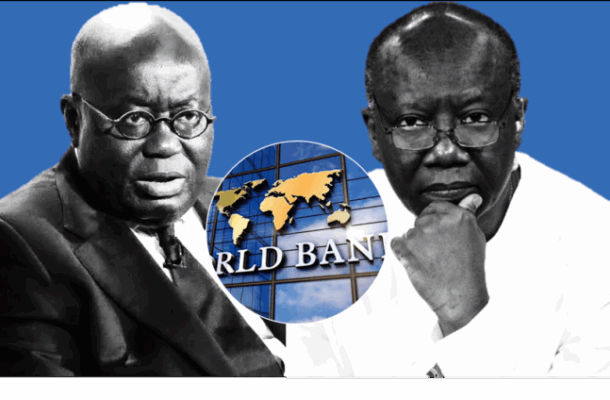
The World Bank has dismissed the Akufo-Addo administration’s long-standing claim that Ghana’s 2022 economic crisis was primarily caused by external shocks such as the COVID-19 pandemic and the Russia-Ukraine war.
In its latest 2025 Policy Notes on Ghana, the Bank said the collapse was “homegrown,” rooted in years of weak governance, fiscal indiscipline, and stalled reforms.
While acknowledging that the pandemic and Russia’s invasion of Ukraine aggravated the situation, the report stressed they were not the underlying cause.
“The deterioration of global conditions… was not the cause of the 2022 macroeconomic crisis; rather, it merely exposed an economy already beset with deep structural vulnerabilities and precarious macroeconomic conditions,” the Bank stated.
The 2022 meltdown saw inflation soar, the cedi lose significant value, and Ghana default on its debt. According to the World Bank, easy access to international credit and overreliance on anticipated resource windfalls encouraged short-term political choices that undermined long-term stability.
This pattern of expansionary spending followed by painful corrections has, the Bank said, left Ghana under International Monetary Fund (IMF) support for 40 of the past 68 years—17 different programmes in total.
The human cost has been severe. More than 800,000 people were pushed into poverty following the crisis, while per capita incomes have stagnated at around US$2,200 for over a decade. Today, over a quarter of Ghanaians live below the poverty line.
Looking ahead, the World Bank expressed concern about fiscal management in the 2024 election year. It cited unbudgeted spending commitments of about US$4.8 billion—5.7% of GDP—much of it off the books.
“Spending indiscipline poses a critical challenge… undermining efforts to maintain fiscal discipline and compromising long-term sustainability,” the report warned.
The Bank also highlighted persistent structural challenges, including annual energy sector arrears of about 2% of GDP and COCOBOD debts that reached US$1.8 billion in 2024, with interventions distorting markets and hurting farmers.
The report concluded that Ghana stands at a turning point. Temporary fixes will not suffice; what is needed is a decisive break from the past.
“There is an urgent need to signal a clear break from the past and a commitment to change… Success will ultimately be measured by the ability of the government to regain the trust of its citizens.”
To achieve lasting stability, the World Bank recommended restoring fiscal discipline, broadening the tax base, reforming state-owned enterprises, and strengthening governance. Without these reforms, it warned, Ghana risks remaining stuck in its cycle of crisis and bailouts for decades to come.
Comments