
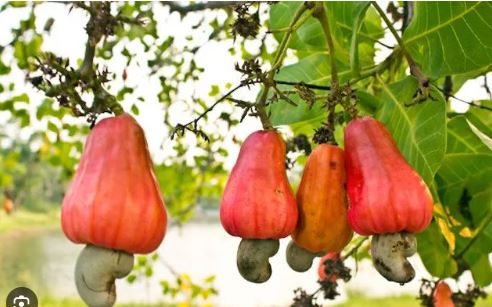
The Tree Crops Development Authority (TCDA) has projected that Ghana’s cashew industry could generate more than US$660 million in annual revenue if supported with effective regulation, expanded processing infrastructure and improved export facilitation.
The projection was disclosed by the Chief Executive Officer of the TCDA, Dr Andy Osei Okrah, during a stakeholder engagement in the Bono Region. The forum brought together farmers, processors, aggregators and traditional authorities to discuss regulatory reforms, pricing systems and strategies for expanding access to local and international markets.
The engagement formed part of TCDA’s efforts to strengthen collaboration across the cashew value chain and improve stakeholder understanding of regulatory requirements, licensing processes and pricing mechanisms.
Cashew remains one of Ghana’s most important non-traditional export commodities, contributing significantly to foreign exchange earnings and rural employment. However, the authority acknowledged that weak regulation, inconsistent pricing practices and limited domestic processing capacity have constrained the sector’s growth and profitability.
Cashew is one of six priority crops identified under the government’s Tree Crops Development Agenda, aimed at diversifying agricultural exports and promoting agro-industrialisation.
To address existing challenges, the TCDA is rolling out a series of interventions focused on stabilising farm-gate prices, enforcing licensing requirements and enhancing transparency across the value chain. According to the authority, these measures are intended to protect farmers from exploitation, attract private investment into processing facilities and position Ghana as a leading cashew exporter in West Africa.
As part of the reforms, the TCDA is developing a national pricing framework to guide buyers, processors and exporters. The framework is expected to promote fairness and predictability, ensuring a stable and competitive market environment that benefits both producers and investors.
Officials say the long-term objective extends beyond exporting raw cashew nuts to building a robust cashew economy anchored in industrial processing, job creation and higher export earnings.
Industry analysts believe that with the right policy support, Ghana could compete more strongly with regional leaders such as Côte d’Ivoire and Nigeria, while significantly expanding domestic processing to capture greater value locally.
Currently, Ghana earns about US$300 million annually from cashew exports, but more than 90 percent of production is exported as raw nuts rather than processed kernels—representing a major lost opportunity for value addition and economic growth.
The sector directly supports approximately 300,000 farmers and an additional 200,000 people engaged in trading, transportation and processing activities. Production is concentrated in seven regions, with Bono, Bono East and Ahafo emerging as key production hubs.
In 2020, Ghana exported about 139,743 metric tonnes of raw cashew nuts, generating US$251.4 million in revenue, with Vietnam and India serving as the primary processing destinations.
TCDA officials say the renewed emphasis on regulation, transparency and innovation aligns with broader government efforts to diversify export earnings beyond cocoa and build a more resilient, industrialised agricultural economy that promotes inclusive growth.
Comments