
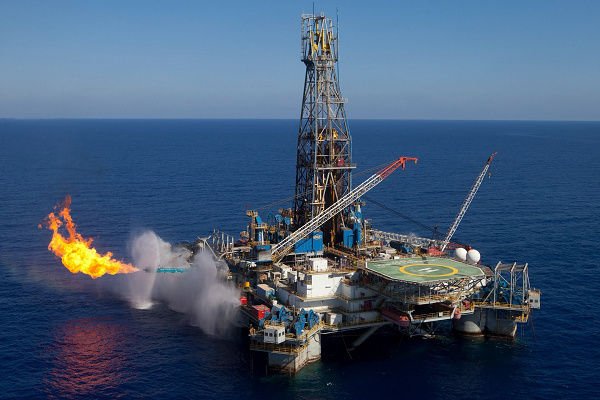
Ghana’s petroleum revenue rose sharply in 2024, reaching US$1.36 billion, the second-highest annual level since oil production began in 2010, despite a continued decline in crude oil output.
The figure represents a 27.8 percent increase over the US$1.06 billion recorded in 2023, according to the Public Interest and Accountability Committee’s (PIAC) 2024 Annual Report presented in Koforidua by committee member Samuel Bekoe. The surge was largely driven by favourable international oil prices, even as production volumes dropped.
Crude oil output fell to 48.24 million barrels in 2024, down from a peak of 71.44 million barrels in 2019, marking a five-year downward trend. “The revenue performance reflects the resilience of Ghana’s petroleum sector in the face of declining output,” Mr. Bekoe said.
Raw gas production hit 280,511 MMSCF in 2024, with the SGN field contributing nearly half. Of the total, 44.3 percent was reinjected, 41.3 percent exported, 10.2 percent flared, and 4.2 percent used as fuel. Since 2014, Ghana has produced over 1.77 trillion MMSCF of commercial raw gas.
Petroleum revenues in 2024 came from: Carried and Participating Interest (CAPI): US$603.5m, Corporate Income Tax (CIT): US$502.9m, Royalties: US$240m and Other income: including surface rentals and PHF interest
The Petroleum Holding Fund (PHF) distributed revenues as follows:
GNPC: US$280.6m, Annual Budget Funding Amount (ABFA): US$493.3m, Ghana Stabilisation Fund (GSF): US$409m and Ghana Heritage Fund (GHF): US$175.3m
Cumulatively, Ghana has earned US$11.21 billion from petroleum since 2011, with nearly all channelled through the PHF.
For 2024, the ABFA was allocated to four priority areas: Agriculture (including Fisheries), Education and Health Infrastructure, Roads/Rail/Other Critical Infrastructure, and Industrialisation. However, PIAC flagged concerns after no funds were directed to Industrialisation.
In the Eastern Region, ABFA-funded projects included: GHC7m for road construction in Atekyem, Koforidua, GHC2.6m for a CHPS compound in Asuogyaman, GHC1m for bitumen surfacing of feeder roads and GHC600,000 for a rural market and boreholes in Upper Manya Krobo.
The report revealed several critical issues: No new petroleum agreements signed in 2024, extending a five-year freeze. GNPC Explorco failed to transfer US$145.7m into the PHF, bringing cumulative unpaid revenues to US$489m. Surface rental arrears by international oil companies reached US$2.89m, with 60 percent owed by firms whose contracts were terminated in 2021. Ghana forfeited 1,186.81 MMSCF of Make-Up Gas (MUG) from the SGN field. The TEN field recorded the lowest output but the highest development costs, with state contributions rising by more than 400 percent.
PIAC urged Parliament to enforce compliance with Regulation 8 of L.I. 2381, noting that the GSF cap was unlawfully retained at US$100m instead of the required US$517.4m. It also recommended:
Shielding GNPC and GNPC Explorco from loan obligations outside their mandates. Intensifying efforts by the Ministry of Energy to attract upstream investments. Stronger collaboration between GRA, the Petroleum Commission, and the Bank of Ghana to recover outstanding surface rentals.
“The government must ensure that industrialisation is not just a stated priority but a funded one,” the report stressed.
Comments