Ghana’s ambition to establish a fully integrated iron and steel industry has taken a significant step forward following the signing of a cooperation agreement between the Ghana Integrated Iron and Steel Development Corporation (GIISDEC) and the Ghana Geological Survey Authority (GGSA). The agreement aims to deepen technical work on mineral exploration and resource estimation.
The memorandum of understanding (MoU) formalises a collaboration that has been ongoing for several years. It outlines joint efforts in geological mapping, geophysical surveys, sampling and laboratory analysis, drilling supervision, and data interpretation.
GIISDEC Chief Executive, Williams Okofo-Dateh, said the MoU provides clarity on technical responsibilities as Ghana moves toward its first comprehensive iron ore resource estimation. He noted that the country is transitioning from broad exploration to more detailed assessment, making institutional coordination critical.
“This agreement gives both agencies a clear framework to accelerate work, ensure credible data, and reduce duplication,” Okofo-Dateh said.
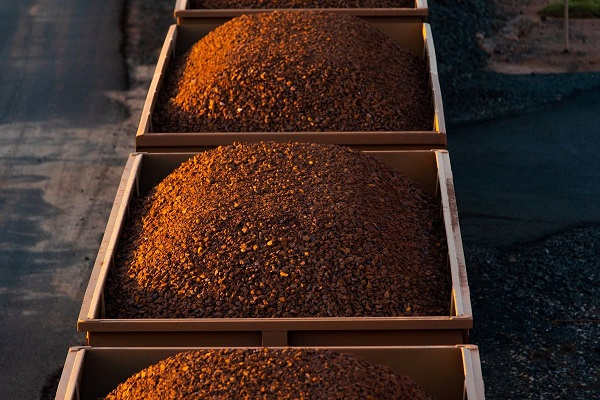
He added that GIISDEC plans to expand into a second exploration block at Kadjebi in the Oti Region once cabinet approval is secured, following completion of drilling at the Gyamurume Block. Preliminary findings from GIISDEC and its technical partner, Africa Exploration and Minerals Group, indicate commercially viable deposits with competitive grades. Oxidised ore samples from Gyamurume contain up to 82 percent iron oxide (around 57 percent iron), with average grades of 67 percent iron oxide (approximately 47 percent iron).
Okofo-Dateh emphasised the strategic importance of domestic production, noting Ghana currently imports about 800,000 tonnes of iron and steel annually, costing around US$900 million. “If Ghana can validate and develop these resources, we can significantly cut import bills and build a new industrial base,” he said.
Under the MoU, the Geological Survey Authority will lead most of the technical assessments. Acting Director-General Isaac Kuuwan Mwinbelle said the partnership will standardise scientific processes, ensure data meets international reporting standards, and strengthen the basis for government investment decisions.
“This collaboration allows us to deploy our expertise more efficiently and provides dependable geological information necessary for major development,” Mwinbelle said. He added that deeper mapping and structured field investigations will determine the scale of investment required for future mining and processing.
The two agencies expect the agreement to accelerate remaining stages of exploration ahead of feasibility studies. Ghana’s estimated 1.7 billion tonnes of iron ore reserves, primarily in the Oti and Savannah regions, remain under-assessed, and the MoU is intended to confirm commercial value and attract investors to the sector.
Comments