
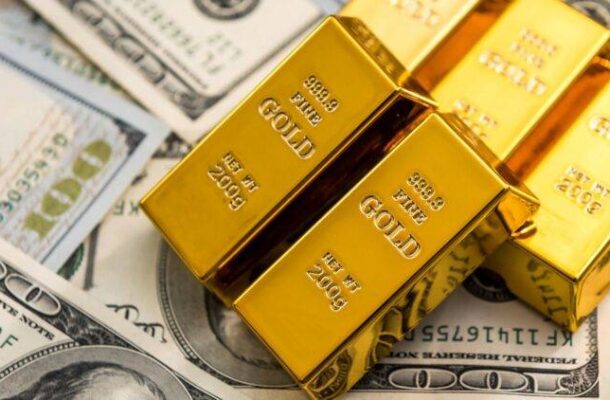
Gold has overtaken the US dollar as the world’s largest global reserve asset, reflecting a significant shift in international reserve management.
The development is being driven by increased demand for gold from central banks and financial institutions, which are turning to the metal as a stable store of value amid persistent economic uncertainty and geopolitical tensions.
Unlike fiat currencies, gold is not tied to any single government or monetary authority, enhancing its appeal as a hedge during periods of political strain, trade disputes and market volatility. The change in reserve rankings signals broader adjustments in the global financial system, where traditional reserve currencies are facing growing competition from alternative assets.
Following recent global trade tensions, the US dollar saw a surge in demand and asset accumulation, reaching record levels by mid-2025. However, momentum has since shifted toward gold. Global central bank gold holdings increased by approximately 15 percent compared to 2024 levels, with major buyers including China, India, Turkey and several Middle Eastern nations.
In a notable milestone, foreign central banks are now holding more gold than US Treasury securities in their reserves for the first time since 1996 — a development widely viewed as a turning point in reserve diversification strategies.
At the start of 2026, gold strengthened its position as a preferred hedge against currency volatility and inflationary pressures. Prices climbed to a record high of $5,300 in January 2026, surpassing the previous all-time peak. The rally followed comments by US President Donald Trump dismissing concerns about a weaker dollar.
On the supply side, the world’s leading gold producers include China, Australia, the United States, South Africa, Peru, Russia and Indonesia. Meanwhile, the largest consumers of gold jewellery are India, China, Turkey, the United States, Saudi Arabia, Russia and the United Arab Emirates.
The reordering of global reserve assets underscores a growing preference for tangible, non-sovereign stores of value in an evolving and increasingly uncertain economic landscape.
Comments