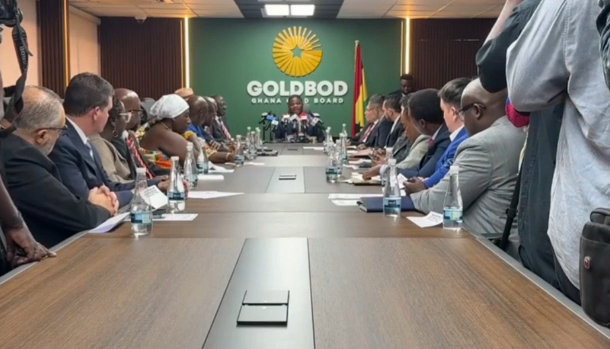
The Ghana Gold Board (GoldBod) and Gold Coast Refinery have signed a landmark agreement to refine Ghana’s gold locally for both domestic use and export, in a move aimed at deepening value addition in the country’s gold sector.
The agreement was signed on Tuesday, January 20, 2026, in Accra and will ensure that gold produced from both artisanal and large-scale mining operations is refined within Ghana, rather than being exported in its raw form.
Speaking at the signing ceremony, the Chief Executive Officer of GoldBod, Sammy Gyamfi, said the partnership would significantly improve transparency and accountability across the gold value chain through the introduction of a comprehensive track-and-trace system.
“This partnership will strengthen the track-and-trace system across the entire gold value chain and ensure greater transparency in Ghana’s gold trade,” Mr. Gyamfi said.
He disclosed that Ghana currently exports about one tonne of gold each day and explained that under the new arrangement, all gold exports will leave the country in refined form, with a minimum purity of 99.9 percent, which meets the highest global industry standards.
According to him, exporting refined gold instead of raw gold marks a major milestone in Ghana’s mineral development strategy, as it will enable the country to maximise revenue and extract greater value from its gold resources.
Mr. Gyamfi added that the agreement is expected to generate multiple benefits, including increased state revenue, job creation, expansion of local refining capacity, and enhanced monitoring of gold production and exports.
The partnership comes at a time when Ghana, Africa’s leading gold producer, continues to export a large portion of its gold in raw form, leading to significant revenue losses. GoldBod believes the agreement with Gold Coast Refinery will help reverse this trend by anchoring more stages of the gold value chain within the country and strengthening Ghana’s competitiveness in the global gold market.
Comments