
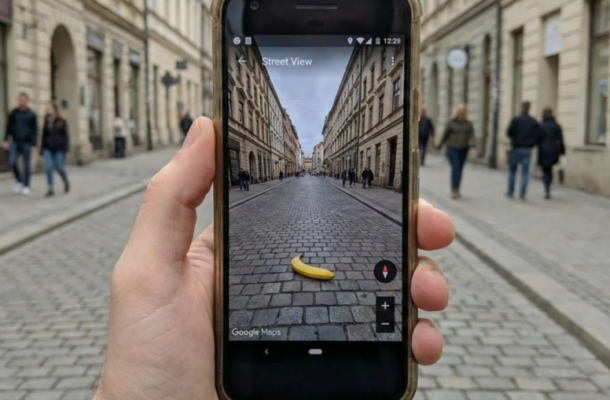
Google wants to integrate Nano Banana into Maps, bringing AI-powered image generation to real-world locations through Street View in a potentially game-changing update.
A Surprising Twist in Mapping Technology
Tech giant Google appears to be preparing a bold new feature that could reshape how users interact with digital maps. Reports suggest the company is working to embed its advanced artificial intelligence tool, Nano Banana, directly into Google Maps—a move that has sparked both curiosity and debate.
The integration, while unexpected, reflects a broader shift in how AI is being woven into everyday applications. By combining mapping technology with creative image generation, Google may be opening the door to a more immersive and personalised user experience.
Why “Google wants to integrate Nano Banana into Maps” Is Turning Heads
Nano Banana, widely regarded as one of the most powerful AI image generators and editors currently available, has quickly gained attention for its ability to transform visuals with remarkable precision. Its potential addition to Google Maps signals an expansion beyond traditional AI use cases.
According to findings by Android Authority, snippets of code discovered in the latest version of the Maps app indicate that groundwork for the feature is already underway. While not yet officially announced, such early indicators often point to features in active development.
The idea of merging an AI art tool with a navigation platform may seem unusual at first glance. However, it underscores Google’s strategy of integrating creative AI capabilities into widely used services.
How Nano Banana Could Work Inside Google Maps
If implemented, the feature is expected to draw heavily on Google Maps’ Street View functionality. Users may be able to generate images based on real-world locations captured by Street View, effectively transforming familiar places into stylised or imaginative visuals.
This could allow users to reimagine landmarks, streets, and cities in entirely new ways—whether by applying artistic filters, altering environmental elements, or creating entirely new visual interpretations.
The integration may also enable users to customise images based on specific prompts, giving them control over how locations are represented. In essence, the tool could turn Google Maps into not just a navigation app, but also a creative platform.
Innovation or Experiment? Industry Watches Closely
While the concept is intriguing, questions remain about how widely the feature will be used. Some analysts suggest it could become a niche addition—appealing primarily to creative users—while others believe it could introduce a new form of digital storytelling tied to real-world geography.
There is also the possibility that the feature evolves into something more practical, such as visualising future developments, redesigning spaces, or enhancing travel planning with personalised imagery.
At this stage, much depends on how seamlessly the tool integrates into the existing user experience and whether it adds meaningful value beyond novelty.
When Could the Feature Arrive?
Although Google has not confirmed a release date, the presence of supporting code in recent app updates suggests that development is already at an advanced stage. Industry observers expect that an official announcement may not be far off.
For now, the tech community is watching closely as the idea takes shape.
The Bigger Picture for AI and Everyday Apps
The move highlights a growing trend: artificial intelligence is no longer confined to standalone tools. Instead, it is becoming embedded in widely used platforms, transforming how people interact with technology on a daily basis.
As Google wants to integrate Nano Banana into Maps, the company is effectively testing how far creative AI can extend into practical applications. Whether it becomes a widely used feature or remains an experimental addition, it signals a future where navigation and creativity increasingly overlap.
In the end, Google wants to integrate Nano Banana into Maps may prove to be more than just a technical update—it could represent a new chapter in how digital tools blend functionality with imagination.
Comments