
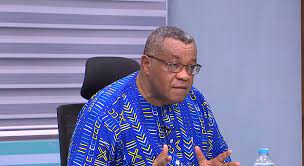
The Presidential Advisor on the 24-Hour EconomySpeaking on GTV Talking Point on Sunday, February 22, 2026, Tanoh stressed that the shift to multi-shift operations will be guided by “economic logic” and favourable market conditions created by the state.
Addressing concerns about how the policy will be implemented in practice, he noted that businesses respond to profitability, not administrative orders.
“If an economy is operating at full capacity, nobody is going to tell industry to do shifts,” Tanoh explained. “It is a function of capacity, the investment regime, and the incentive regime that allows companies to take that decision.”
He elaborated that firms will only adopt additional production shifts when the marginal revenue from the next unit of output exceeds the marginal cost of hiring additional labour and running utilities. “Companies operate on the marginal… You can’t force anybody to do a 1-3-3 [shift system]. What you need to do is create an incentive and an environment that allows them to do that,” he said.
Tanoh’s comments follow President John Dramani Mahama’s assent to the 24-Hour Economy Bill, which has now become law, providing a formal framework to coordinate the program’s rollout.
The government asserts that the policy will transform Ghana’s industrial landscape by boosting productivity, enhancing export capacity, and creating sustainable employment through multi-shift operations. It will also offer targeted incentives for industries and service providers to extend operating hours.
Tanoh emphasised that the long-term success of the 24-Hour Economy depends on a supportive investment climate that naturally encourages private sector participation and expansion.
Comments