
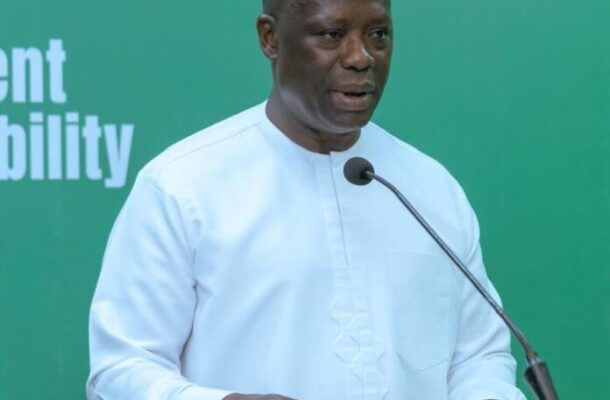
The Government of Ghana will cancel all uncompleted public land transactions and re-examine completed allocations following a review of 8,160 leases executed or initiated between 2017 and 2024 across all 16 regions, Emmanuel Armah-Kofi Buah, Minister for Lands and Natural Resources, has announced.
The move comes after a nationwide audit ordered by President John Dramani Mahama uncovered cases where state properties were sold at as little as one percent of market value, depriving the state of revenue and eroding public trust.
Under the new reforms, public land premiums will be raised to a minimum of 70 percent of assessed market value, and beneficiary lists will be published region by region, starting with Greater Accra. All future allocations will require ministerial approval.
Speaking at a press briefing in Accra, Buah said Cabinet had approved the immediate implementation of recommendations from a committee set up last year to review public land leases.
“The establishment of this committee underscores government’s firm commitment to restoring public confidence in land administration and ensuring that public lands are managed with integrity, efficiency, and in the best interest of national development,” he stated.
Scope of Review
The committee examined:
- 4,176 direct allocations
- 2,799 regularisations
- 19 allocations for state bungalows
- 108 land-swap or public-private partnership arrangements
- 795 subsequent transactions
- 263 fresh allocations
The review revealed several allocations that did not comply fully with Lands Commission procedures, weakening transparency and accountability and exposing the system to abuse.
As part of the reforms, all uncompleted transactions in the affected categories will be cancelled with applicants formally notified. Completed transactions will undergo case-by-case review, with any found to have bypassed due process being revoked.
Buah clarified: “A transaction will be treated as completed where a formal offer has been issued and accepted by the applicant. Transactions below this threshold will be treated as uncompleted for this exercise.”
Both completed and uncompleted lists will be published on the Ministry and Lands Commission websites by region. Affected applicants will be allowed to reapply after the reforms are implemented.
Reform Measures
Key elements of the overhaul include:
- Review of the Public Land Application Form (Form 5)
- Strengthening internal processes at the Lands Commission
- Legislation to anchor the reforms
- Revision of public land premiums
- Compilation of market value data for defined land clusters
- Establishment of a Public Land Protection Task Force
Buah also confirmed that the temporary suspension of Lands Commission services—including leasing, processing, and regularisation—has been lifted. “All activities can resume immediately, but strictly under the new reforms to ensure transparency, accountability, and value for money,” he said.
The Minister stressed that public lands are vested in the President in trust for Ghanaians and must be administered in the public interest to support national development, public infrastructure, and equitable access.
Additionally, the Ministry has secured full retention of the Lands Commission’s internally generated funds, with 67 percent earmarked for the Land Bank and Digitisation Project, a move designed to enhance efficiency, transparency, and public confidence in land administration for current and future generations.
Comments