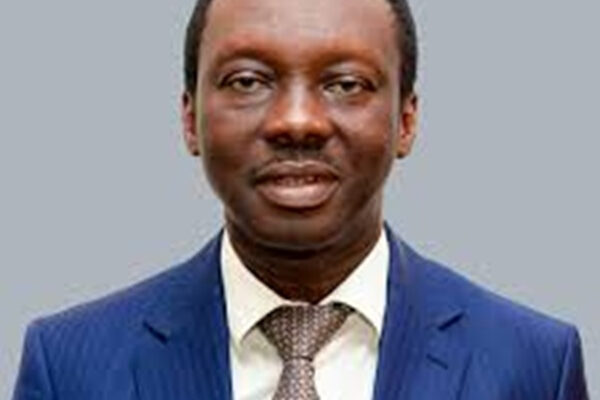
The government of Ghana plans to shift toward localised budgeting for the Sustainable Development Goals (SDGs) as part of efforts to close persistent development gaps and enhance accountability ahead of the 2030 deadline, Budget Director at the Ministry of Finance, Isaac Fraikue, has announced.
Speaking at the launch of the 2023 SDG Budget and Expenditure Report in Accra, Fraikue said the localisation of SDG budgeting will enable the government to track progress more precisely at the district level, strengthening the link between national targets and actual outcomes.
“This approach will improve transparency, integrate better data, and ensure that SDGs are reflected in spending decisions at all levels of government,” he noted, expressing confidence that Ghana remains on track to meet the SDG targets.
Fraikue highlighted that public agencies increasingly recognise the connection between their activities and specific SDGs, describing it as evidence that “generally, we are conscious” of the commitments. He, however, acknowledged that certain goals, including zero hunger, will require deeper learning and adjustments as implementation continues.
The 2023 report provides detailed insights into budget allocations, expenditures, policy interventions, and progress across ministries and local authorities. Fraikue said the document offers “an explicit and measurable account” of how SDG targets are integrated into the budget, achieved by aligning national development policies with the country’s chart of accounts.
“Beyond tracking expenditures, this report tells the story of Ghana’s development journey and demonstrates our commitment to ensuring that no one is left behind,” he added.
Chief Director at the Ministry of Finance, Dr. Patrick Nomo, highlighted a significant increase in SDG-related spending, rising from GH¢83 billion in 2022 to GH¢188 billion in 2023. He described the surge as evidence of the government’s commitment to advancing health, education, social protection, and human capital development.
“This is not only a report but also a demonstration of our commitment,” Dr. Nomo said, urging development partners to accelerate support, stressing that collective action is critical to achieving the SDGs.
With five years remaining to the 2030 deadline, he emphasized that collaboration among government, donors, and local institutions is essential.
UNICEF Country Representative, Osama Makkawi Khogali, welcomed the report, noting that it includes child-specific indicators for the first time. He said this reflects how resources are being directed not only toward broad development priorities but also toward the well-being of children.
Khogali highlighted the scale of child poverty in Ghana, citing data showing that 73% of children experience multidimensional poverty. He argued that addressing these challenges requires targeted investment and deliberate policy decisions, and praised the report for providing evidence on whether resources are being appropriately allocated.
He added that with millions of children entering the electorate every four years, their welfare has implications for the country’s future political and economic stability. Khogali called on government and stakeholders to ensure that budgeting decisions prioritise children’s rights and needs.
Comments